Apne Business Ko Franchise Kaise Kare? Turn 1 Business Into 100+ Success Stories

Written by Sparkleminds
apne business ko franchise kaise kare

Written By: Resham Daswani, Sparkleminds Editorial Team – Updated August 2026

Apne Business Ko Franchise Kaise Kare? Quick Answer

Apne business ko franchise karne ke liye sabse pehle ye check karna hota hai ki aapka business scalable, profitable and also repeatable hai ya nahi. Iske baad franchise business model develop karna, SOPs banana, franchise fee aur royalty structure decide karna, brand aur legal documentation ready karna, franchisee training system banana aur suitable franchise partners identify karna hota hai.

apne business ko franchise kaise kare

Simple words mein, apne business ko franchise kaise kare ka answer sirf “franchise dena shuru kar do” nahi hai.

Aapko apne existing business ko ek replicable business system mein convert karna hota hai jise ek trained franchise partner aapke brand standards ke according doosre city mein bhi operate kar sake.

Franchising in India can be particularly beneficial for business expansion for businesses that already have a proven client base, defined operating processes and a business plan that can be copied across locations. Current franchise guidance also promotes company validation, systemisation, brand strength and franchise planning before development.

Business Ko Franchise Kaise Kare? Sabse Pehle Ye Samjhein

Franchising ka matlab hai kisi entrepreneur ko aapke brand name, business model, systems, processes, products or also services ka use karne ka contractual right dena.

Aap franchisor hote hain.

Jo entrepreneur aapke brand ke under business operate karta hai, moreover, woh franchisee hota hai.

Franchisee generally outlet setup aur business operations mein investment karta hai, while franchisor provides the brand, operating system, training, support and other agreed resources.

Depending on your model, franchisor revenue may come from:

  • Franchise fee
  • Royalty
  • Product or supply margins
  • Marketing contribution
  • Technology or also support fees
  • Other agreed commercial arrangements

The exact commercial structure should be based on your business economics rather than copied from another franchise brand.

Kya Har Business Ko Franchise Kiya Ja Sakta Hai?

Nahi. Har business franchise-ready nahi hota.

This is one of the most important questions a business owner should answer before searching for “apne business ko franchise kaise kare.”

Your business should ideally have:

  • Proven demand
  • Consistent sales
  • A clearly defined operating model
  • Repeatable processes
  • A strong value proposition
  • Reasonable profitability
  • Customer retention or also repeat business
  • Potential to operate in other markets
  • Systems that can be taught to another operator

Agar business ka pura operation aapki personal presence par depend karta hai, to pehle us business ko systemise karna zaroori hai.

Therefore, Franchise tabhi scalable hoti hai jab business owner ke bina bhi business model reasonably operate kiya ja sake.

Apne Business Ko Franchise Mein Kaise Convert Kare?

Business ko franchise mein convert karna basically business systemisation + franchise model development ka process hai.

1. Apne Business Ka Franchise Feasibility Check Karein

Sabse pehle analyse karein:

Kya mera business franchise ke liye suitable hai?

Check:

  • Current revenue
  • Profitability
  • Customer demand
  • Competition
  • Operational complexity
  • Investment requirement
  • Scalability
  • Market potential

Aapko ye bhi identify karna chahiye ki aapka business kis type ke franchisee ke liye suitable hoga.

For example, a food brand may require an operator with strong outlet-management skills, while an education or consulting business may require a franchise partner with local networking and sales capabilities.

Franchise Model Kaise Banaye?

A successful franchise model sirf franchise fee decide karne se nahi banta.

Moreover, aapko decide karna hota hai:

  • Franchisee kya invest karega?
  • Franchisor kya provide karega?
  • Franchisee outlet kaise operate karega?
  • Royalty kaise calculate hogi?
  • Territory kaise define hogi?
  • Training kaun provide karega?
  • Marketing ka responsibility kiska hoga?
  • Quality control kaise hoga?
  • Franchise agreement mein kya terms hongi?

Therefore, aapka franchise model financially attractive for the franchisee aur commercially sustainable for the franchisor dono hona chahiye.

Franchise Business Model Kaun Sa Choose Kare?

Different businesses may require different structures.

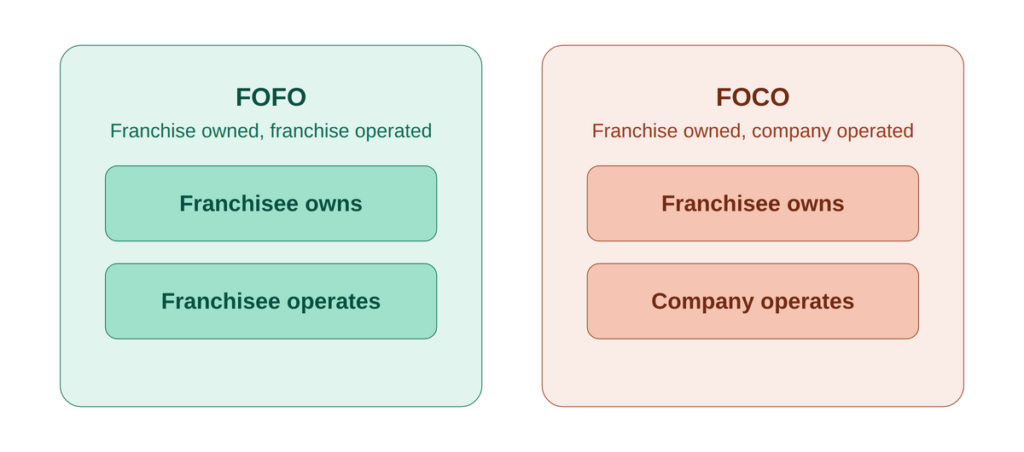
FOFO Franchise Model Kya Hai?

FOFO – Franchise Owned, Franchise Operated

Is model mein franchisee investment karta hai aur outlet ko operate bhi karta hai.

Moreover, this can work well where the franchisor has established SOPs and wants franchise partners to manage local operations.

FOCO Franchise Model Kya Hai?

FOCO – Franchise Owned, Company Operated

Franchisee investment provide karta hai, while company operations mein greater control rakhti hai.

This model can be considered where operational consistency is particularly important.

Company-Owned Model vs Franchise Model

Company-owned outlets offer more direct management, but require the business owner to put up more capital in each shop.

Franchising can help a brand grow with the use of franchise partner finance and local involvement, but it also comes with the duty of managing franchise partnerships and maintaining brand standards.
apne business ko franchise kaise kare

Apne Business Ki Franchise Dene Ke Liye Kya Chahiye?

A business owner ko franchise launch karne se pehle several components prepare karne chahiye.

  1. Strong Brand Identity: Your logo, visual identity, positioning, customer experience as well as marketing communication should be standardised.
  2. Proven Business Model: A franchisee should understand what they are investing in and also how the business operates.
  3. SOPs and Operations Manual: Every important process should be documented.
  4. Franchise Financial Model: Investment, fees, recurring costs as well as commercial arrangements should be clearly defined.
  5. Franchise Agreement: The legal relationship between franchisor as well as franchisee should be appropriately documented.
  6. Training System: Franchisees and their employees need structured training.
  7. Franchise Support System: The franchisor needs to determine what support continues after the outlet launches.
apne business ko franchise kaise kare

Franchise SOP Kaise Banaye?

SOP – Standard Operating Procedure – franchise business ka backbone hota hai.

Aapko document karna chahiye:

  • Store opening process
  • Store closing process
  • Customer handling
  • Sales process
  • Product/service delivery
  • Staff recruitment
  • Staff training
  • Inventory management
  • Vendor management
  • Quality checks
  • Complaint handling
  • Marketing process
  • Reporting system

Further, think about this question:

“Agar main kal apne business se completely remove ho jaun, kya ek trained person is business ko meri system ke according chala sakta hai?”

Agar answer “no” hai, your business probably needs more systemisation before franchising.

Franchise Dene Mein Kitna Kharcha Aata Hai?

This is another important search question for business owners.

Franchise development ki koi single fixed cost nahi hoti.

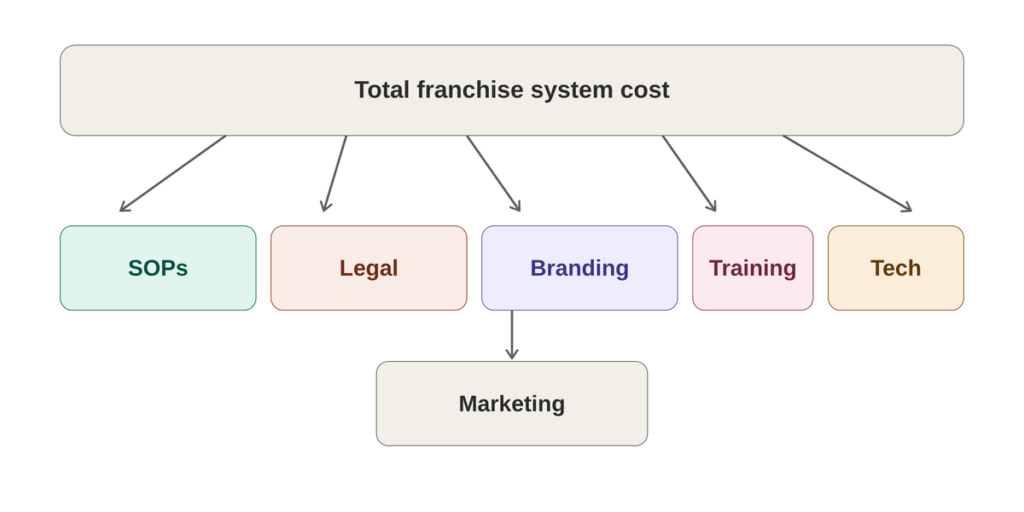
The investment required can vary based on:

  • Industry
  • Business size
  • Existing systems
  • Number of outlets
  • Legal requirements
  • SOP development
  • Technology
  • Training
  • Branding
  • Franchise marketing
  • Consultant requirements

A small service business and a multi-location restaurant chain will obviously require different levels of franchise preparation.

Instead of asking only “franchise banane mein kitna paisa lagega?”, business owners should calculate the cost of building a complete franchise system.

Franchise Agreement Kaise Banaye?

Franchise agreement kaise banaye?” is an important commercial and legal question.

The agreement should clearly define matters such as:

  • Franchise rights
  • Territory
  • Franchise term
  • Fees
  • Royalty
  • Brand usage
  • Intellectual property
  • Operating standards
  • Training
  • Marketing responsibilities
  • Supplier arrangements
  • Reporting requirements
  • Renewal
  • Termination
  • Confidentiality
  • Dispute-related provisions

Indian business owners should work with qualified legal professionals for franchise documentation rather than relying on generic agreements downloaded from the internet.

Franchise Kaise De? Franchise Partner Kaise Dhunde?

Once your franchise model is ready, the next question becomes:

“Franchise kaise deni hai aur franchise partner kaise milega?”

This is where many business owners make a mistake.

Don’t select a franchisee only because they have the money.

Look for:

  • Financial capability
  • Business understanding
  • Local market knowledge
  • Sales ability
  • Operational commitment
  • Brand alignment
  • Willingness to follow SOPs
  • Long-term business mindset

The right franchise partner can become an important growth asset.

The wrong franchise partner can create operational problems and potentially damage your brand reputation.

Business Ko India Mein Kaise Expand Kare Through Franchising?

Once your business becomes franchise-ready, you can create a structured India expansion strategy.

Instead of randomly accepting franchise enquiries, identify priority markets.

Tier 1 Cities

Large markets can provide strong demand but may also involve:

  • Higher rentals
  • Higher competition
  • Higher operating costs

Tier 2 Cities

These can offer opportunities for brands that understand local customer demand and price sensitivity.

Tier 3 Cities

For selected business categories, smaller cities can provide opportunities where organised branded offerings are still developing.

Your city expansion strategy should consider:

market demand + competition + investment + rental cost + local purchasing power + franchisee availability.

Franchise Business Expansion Mein Market Research Kyun Zaroori Hai?

Before entering a new city, ask:

Kya mere product ya service ki demand wahan hai?

Research:

  • Local competitors
  • Customer demographics
  • Pricing
  • Existing brands
  • Property availability
  • Rental levels
  • Local purchasing power
  • Supply chain
  • Franchise partner availability

Market research and feasibility analysis are repeatedly highlighted in franchise-development guidance because they help determine whether the model can be replicated and whether a particular market is suitable.

Apne Business Ko Franchise Karne Ke Fayde Kya Hain?

Franchising can offer several potential advantages for established business owners.

  • Business Expansion Without Funding Every Outlet Yourself: Franchisees generally invest in establishing their own locations, reducing the need for the franchisor to fund every outlet directly.
  • Faster Market Expansion: A franchise network can allow a brand to establish a presence in multiple markets more quickly than relying exclusively on company-owned outlets.
  • Local Business Knowledge: Franchise partners can bring knowledge of local customers, competition and market conditions.
  • Recurring Revenue Potential: Depending on the commercial structure, franchisors may generate franchise fees, royalties or supply-related revenue.
  • Stronger Brand Presence: Successful franchise outlets can increase brand visibility and create opportunities for further expansion.

However, franchising should never be treated as easy passive income.

A franchisor still has to invest in training, support, marketing, quality control and franchise relationship management.

Franchise Business Mein Business Owners Ko Kaunsi Mistakes Avoid Karni Chahiye?

Business Profitably Prove Hone Se Pehle Franchise Karna

A business should ideally have enough operating history and evidence that its model works.

  • SOPs Na Banana: Without proper SOPs, every franchise outlet may operate differently.
  • Sirf Franchise Fee Ke Liye Franchisee Select Karna: The highest-paying applicant isn’t necessarily the best franchise partner.
  • Unrealistic ROI Promise Karna: Franchise economics should be transparent and based on reasonable assumptions.
  • Legal Documentation Ignore Karna: A poorly structured franchise relationship can create disputes later.
  • India Mein Random Expansion Karna: Every city is not necessarily the right market for your brand.
  • Franchisee Support Ignore Karna: Your responsibility doesn’t end when the franchise agreement is signed.

Apne Business Ko Franchise Karne Se Pehle Ye 10 Questions Puchhein

Before starting your franchise journey, ask:

  1. Kya mera business profitable hai?
  2. Kya mera business repeatable hai?
  3. Kya meri SOPs ready hain?
  4. Kya mera brand legally protected hai?
  5. Kya doosra entrepreneur mera model successfully operate kar sakta hai?
  6. Franchisee ko kitni investment karni hogi?
  7. Franchise fee aur royalty kaise structure karunga?
  8. Main franchisee ko kitna training aur support dunga?
  9. Kaunse Indian cities mere expansion ke liye suitable hain?
  10. Kya mujhe franchise consultant ki professional support chahiye?

If you cannot answer several of these questions, your business may need additional preparation before launching its franchise model.

Final Takeaway: Apne Business Ko Franchise Kaise Kare?

Apne business ko franchise karna ek structured business expansion strategy hai—not simply a way to sell franchise outlets.

A successful franchise brand is built on:

Strong Business + Scalable Model + SOPs + Brand + Financial Structure + Legal Framework + Training + Franchisee Support + Right Expansion Strategy

Agar aapka business profitable hai, customer demand proven hai aur operations ko standardise kiya ja sakta hai, franchising could become a powerful route to expand your brand across India.

The most important question is therefore not just:

“Apne business ko franchise kaise kare?”

It is:

“Kya mera business franchise ke through sustainably scale hone ke liye ready hai?”

If the answer is yes, the next step is to build the right franchise model before you start looking for franchise partners.

Want to turn your existing business into a scalable franchise brand? Connect with Sparkleminds to explore your franchise expansion strategy in India.

FAQs

Apne business ko franchise kaise kare?

Apne business ko franchise karne ke liye business feasibility check, franchise model development, SOP creation, financial structuring, legal documentation, training, franchise support and franchisee selection ki process follow karni hoti hai.

Aap apne business ki franchise kaise de?

Pehle business ko franchise-ready banayein, commercial model and franchise documentation prepare karein, suitable franchise partners identify karein aur structured onboarding and training process establish karein.

Business ko franchise mein convert kaise kare?

Business ko franchise mein convert karne ke liye existing operations ko systemise aur document karein, brand standards define karein, franchise economics develop karein and ensure karein ki model different locations mein replicate ho sake.

Franchise business model kaise banaye?

Investment requirements, franchise fee, royalty, territory, operating duties, training, marketing and ongoing support structure define karna hota hai for franchise model banane ke liye.

Franchise dene ke liye kya chahiye?

Aapko generally a proven business model, strong brand, SOPs, franchise economics, appropriate legal documentation, training system and franchisee-support framework ki zarurat hoti hai.

Franchise business kaise start kare?

Agar aap existing business owner hain, franchise business start karne ka first step franchisee dhoondhna nahi, balki apne existing business ko franchise-ready banana hai.

Franchise kaise beche?

Franchise ko sirf sales product ki tarah sell karne ke bajay, business owners ko suitable franchise partners identify karke unhe transparent investment, operating model, support and commercial information provide karni chahiye.

Ek franchise business mein royalty kya hoti hai?

Royalty is an ongoing commercial payment that a franchisee may pay to the franchisor according to the agreed franchise structure. It may be calculated as a percentage of sales, a fixed amount or another agreed mechanism.




Loading

Home Décor & Interiors Business Expansion: Franchising Across India’s Cities

Written by Sparkleminds

The home decor and interior designing space in India is evolving quicker than ever. The niche luxury sector is a trendy lifestyle trend. The home decor & interior business is experiencing a tsunami of change, thus, transforming the way Indians design, furnish and enjoy their homes, driven by rising disposable incomes, more urbanisation and a love for beautiful living.

home decor & interior business

The country’s home retail sector is expected to grow to $237 billion by 2030, with the wall décor category alone forecast to increase from $690 million in 2024 to $1.21 billion in 2032. Moreover, these figures present a significant potential for entrepreneurs, investors and global brands looking to tap into India’s growing décor and interiors market.

The franchising has emerged as one of the most feasible solutions for the business owners to expand across the various cities of India. It’s the combination of brand consistency and local market agility that allows decor and interior enterprises to scale swiftly while maintaining quality and design integrity. 

Indian Home Decor & Interior Business Space – The Market Ready For Disruption 

1. The Age of Aesthetic Existence

Design, comfort and personalisation are becoming crucial for Indian consumers. Today’s decor is aspirational and lifestyle focused – modular kitchens, smart lighting, sustainable materials and minimalist furniture. For the “Instagram generation”, home design is a way of showing who you are. Also, Décor expenditure is on the rise.

2. Urbanisation & Tier II/III Growth

Metros like Mumbai, Delhi & Bengaluru remain to be the bastions but the real growth is coming from Tier II & III towns like Indore, Surat, Coimbatore & Lucknow. Moreover, cities with higher disposable income, real estate development and desire-driven consumerism all give an excellent foundation for franchise in decor and interiors.

3. Digital effect and e-commerce

Platforms such as Pinterest, Instagram and Amazon have democratised design inspiration. Also, consumers are increasingly researching, comparing and purchasing décor products via the internet. Omnichannel expansion has become a necessary following the digital revolution, combining physical showrooms with online presence.

4. Smart Homes & Sustainable Living

Sustainable materials, energy-efficient designs and smart home integrations are changing the game. Thus, brands that resonate with these trends are getting noticed by millennial and Gen Z homeowners.

Franchising: The Optimal Growth Model

Franchising is an option for decor and interior business firms to spread up across diverse sectors in India with low risk and also scaling up. Here is how it works:

1. Local knowledge, global norms 

The local market is known to franchisees, while franchisors maintain brand consistency. Because of this partnership, the interior design firms can meet the tastes of the locals without lowering their standards of quality or style.

2. Speed to Market

To create corporate owned stores all over India, you need a lot of funds. Franchising is a fast expansion method that enables companies to be in multiple locations at the same time through pooled investment.

3. High ROI & Long Term Growth

Home decor franchisees will enjoy good margins as well as repeat revenue as clients will spend on modifications and additions over time. It’s a model that provides steady streams of cash, and long term brand loyalty.

4.Real people’s success stories

HomeLane, Pepperfry and Livspace have grown fast, through franchising as well as partnering. Their success shows that franchising is a viable option in the interiors and décor market in India.

City wise home decor & interior business expansion opportunities Opportunity in City 


City

Market Potential

Consumer Trend

Expansion Opportunity

Bengaluru

High

Tech‑savvy homeowners, smart homes

Modular furniture, automation décor

Mumbai

Very High

Luxury interiors, compact spaces

Space‑saving furniture, premium décor

Delhi NCR

High

Renovation boom, design‑conscious buyers

End‑to‑end interior solutions

Hyderabad

Moderate

Real estate growth, young professionals

Affordable décor franchises

Pune

High

Modern apartments, sustainability focus

Eco‑friendly décor brands

Surat & Ahmedabad

Emerging

Tier II affluence, aspirational living

Mid‑range furniture franchises

Lucknow & Indore

Growing

Expanding real estate, family homes

Modular kitchens, décor boutiques

Steps to Creating a Decor Brand That Can Support a Franchise

Successful franchising in the interior and décor industry involves the following:

  • Branding and Positioning: Focus on one area of home décor, such as eco-friendly, modular, high-end, or smart. The correct franchise partners and consumers will seek you out if you have a distinct identity.
  • Best Practices: Create all-inclusive guides on franchise administration, shop design, product sourcing, customer service, and advertising solutions.
  • Assistance & Coaching: Educate franchisees on the latest fashion trends, sales tactics, and online marketing. Maintained a constant level of brand experience.
  • Marketing/Lead Generation: Generate franchise leads using SEO-optimized content, Google Business Profile posts and social media campaigns. 

We at Sparkleminds do have experience in designing these strategies for Décor business.

Sparkleminds’ Contribution To Interior & Decor Growth

Having more than 28 years of expertise in franchise consultancy, Sparkleminds has enabled hundreds of companies to expand across India and outside. Sparkleminds for Home Decor & Interior Firms:

  • Franchise Consulting – From Concept to Launch.
  • Market research & feasibility analysis – identification of high potential cities & investors profiles. 
  • Franchise recruitment – connecting businesses with qualified partners.
  • Digital Marketing & SEO Strategy for Visibility & Lead Generation.
  • Global Expansion Advisory – Helping Indian Decor Brands Go Global

Therefore, sparkleminds is the bridge between opportunity & execution and the partner of choice for brands at all levels of growth

Emerging Trends Influencing India’s Décor & Interior Industry 

  1. IoT and smart homes: Connected technologies are changing how people use their places. Decor brands of the next decade include smart lighting, automatic blinds, as well as voice-controlled devices.
  2. Sustainable/green material: “They are considering more bamboo, reclaimed wood, as well as recycled fabrics. Sustainability differentiates throughout time, not just now. 
  3. Experience-Driven Retail: AR/VR technology is transforming showrooms into experience centers where customers may view decor options. Franchisors will have a competitive advantage with immersive retail.
  4. Global Expansion: Indian design brands are taking their design skills to the Middle East, Southeast Asia as well as Africa. Franchising is a very easy way to expand globally.

Conclusion – Why Is Franchising Home Decor & Interior Business is a Good Idea For You?

The story of India’s home décor & interior company growth is one of desire, opportunity and revolution. The market for beautiful, useful, and sustainable living spaces is projected to approach $237 billion by 2030.

Franchising is the fastest and most sustainable strategy for entrepreneurs and international businesses to expand up in cities across India. Décor and interior firms can extend across the country and still retain their brand identity with local knowledge, internet marketing and established franchising methods.

At Sparkleminds, we help décor and interior businesses take advantage of this potential and guide them through each stage of growth from conceptualisation to implementation.

FAQs

What is the growth rate of home décor and interior company in India?

Increased disposable income, urbanisation, real estate development and also exposure to foreign design ideas have all played a part in India’s décor boom. Furniture today is seen as a mirror of the consumer’s lifestyle and status.

How Franchising Can Benefit Home Decor Business?

Franchising is an easy way to build brands quickly, with little money. It links local expertise with brand standards, speeding time to market and bringing sustained growth.

How to start a franchise of home decor in India?

Identify your brand speciality, build a franchise model and engage with a company such as Sparkleminds to get support with market research, franchise documentation and recruitment.

Which are the top cities to franchise in Décor & Interiors segment?

Mumbai, Delhi and Bengaluru metros are leading in luxury decor, while Tier II cities like Indore, Surat and Coimbatore are emerging as high growth markets riding on the increasing middle

What is the investment needed to establish a home décor business in India?

Investment by brand and city Entry level décor franchises can be set up at ₹15-20 lakhs and premium interior design franchises can be priced at ₹50 lakhs to ₹1 crore. The charges are often franchise fees, merchandise and also showroom set up fees

What is the profit margin in a home décor & interior franchise?

Depending on where you are, your brand positioning and how effective your operations are, you can be lucrative. The average ROI for franchisees of décor in India is 25-40% per annum and break even point is achieved in 18-24 months. Steady income from remodelling cycle and recurring purchases.


Loading

Top 10 Tier 2 Cities in India for Business Expansion and Franchise Growth

Written by Sparkleminds
franchise expansion

As the Indian economy races towards its target of becoming a USD 5 trillion powerhouse, the focus has switched away from the congested, high-rent corridors of Mumbai and Bengaluru. The actual “gold rush” for the modern entrepreneur and the established brand owner is the Middle India markets. In this detailed study we look at the best cities for franchise expansion in 2026. Tier 2 cities are no longer just “emerging” – they are the main engines of growth in India’s retail and service sector.

franchise expansion

Why Tier 2 Cities Are the New Frontier for Franchises

The Indian franchise business is expected to reach ₹150 lakh crore by 2026 with about 50% of new franchise enquiries coming from Tier 2 and Tier 3 cities. There are three main drivers of this shift:

  • Lower Operating Costs: Rentals in Tier 2 cities are 30-50% lower than metros, therefore bringing down the gestation period for new shops.
  • Aspirational spending: With increased disposable income and high digital penetration, consumers in these cities are wanting the same branded experiences, from gourmet coffee to premium salons, that were formerly the exclusive domain of tier 1 hubs.
  • Infrastructure Boom: Thanks to Smart City projects, new regional airports, and high-speed motorways, logistics and supply chain management for franchises is easier than ever.

Top Ten Tier2 Cities For Businesses & Franchise Growth & Expansion

1. Retail Franchising in Jaipur, Rajasthan’s Pink City

Jaipur’s economy has changed from being centred on tourism to becoming a diverse business center. Mahindra World City has provided a strong IT and industrial backbone and the city’s purchasing power has gone through the roof.

Highly preferable sectors include: F&B, lifestyle retailing and, the education segment.

Why it works: Lots of tourists and an increasing number of professional residents.

2. Northern Growth Engine at Lucknow, Uttar Pradesh

Lucknow is being transformed with huge infrastructure. It provides a large catchment area being the entry point to the growing middle class in Uttar Pradesh.

Best Sectors: Healthcare, Luxury Salons and Pre-schools.

Why this works: Strong government backing like in the “StartInUP” policy and huge investment in the IT parks.

3. Indore, Madhya Pradesh: India’s Cleanest & Fastest Growing Centre For Franchise Expansion

Indore is the trade capital of Central India. It has a unique blend of student population(IIT and IIM) and active trading community.

Best Sectors: Tech enabled services, Cafes, Apparel

How it operates: As India’s cleanest city, it consistently attracts top personnel and investors seeking to conduct business in a structured setting.


4. The Industrial hub, at Coimbatore, Tamil Nadu

Known as South India’s Manchester, it boasts a rich and steady populace with significant affinity towards superior education and wellness businesses.

Top Sectors: Manufacturing support services, Skill-training and Healthcare

Why it works: Low employee turnover and a very disciplined company environment.

5. Kochi’s Digital & Health care top brands

Kochi will soon be considered for its AI-type start-ups and GCCs.

Best Sectors : Professional services, Wellness & Diagnostic centres.

Why it is working: High NRI remittances provide a constant flow of investment funds for local franchises.

6. Chandigarh (Tricity), Punjab/Haryana, is the aspirational hub of India.

Chandigarh, Mohali, and Panchkula are the cities in North India with the highest per capita income.

The most prominent industries are gourmet dining, fitness centers, and luxury retail when it comes to franchise expansion.

Why it functions: The hyper-modern lifestyle and pre-planned infrastructure make this the most seamless transition for Tier 1 brands.


7. Retail in Surat, Gujarat

The city’s consistent GDP growth and renowned entrepreneurial culture are widely recognised.

Fast food, clothing, and jewellery comprise the most prominent franchising sectors.

Why it functions large discretionary expenditure results from low living expenses and large corporate revenue.


8. The Rising IT Hub at Bhubaneswar, Odisha

Bhubaneswar is emerging as a favoured destination for IT titans and educational institutions. It is a “blue ocean” chance for many national businesses.

Top sectors: Ed-tech, Logistics, Grocery Retail.

Why it works: Proactive state government policies and no saturation in the market.


9. Visakhapatnam, Andhra Pradesh: The Port City of Strategy

The unique market of Vizag is comprised of navy personnel, industrial workers and IT professionals owing to its position as a prime industrial and port hub.

Best Sectors Entertainment, Hospitality and Automotive services.

Why it works: Good connections and a thriving tourism industry.


10. Nagpur, Maharashtra: India’s Logistics Hub

Nagpur is the geographical heart of India and is the hub of India’s logistics and warehousing.

Best sectors: Courier & Cargo, Warehouse based retail and QSRs

Why it works: Strategic growth point with MIHAN project and huge road connecting projects.


Best City for Franchise Business in India for 2026?

The finest city depends upon your industry, however for general shopping and F&B, Jaipur and Lucknow are now on top. For tech-driven or service-based models, Coimbatore and Indore would be the best options since their ROI is the most consistent.

Sparkleminds Insight: Not merely Population, look at “Retail Gravity”. Some cities like Nagpur or Lucknow have a consumer base of 100 km radius, increasing their target market overnight.


Is it worth starting a franchise in a Tier 2 city?

“Yes sir.” In fact, several national brands have larger net profit margins in Tier 2 locations than in metros.

Rental-to-revenue ratio: In a metro, you may see rent consume 15-20% of your revenue. In a Tier 2 city, this generally goes down to 5-8%.

Customer loyalty Less competition. If you give a better branded experience, then you can win the market much faster and keep clients longer.


How to pick the best city to scale your company?

Expansion is more than just choosing a point on a map. It’s SOPs and System Design. We suggest a “System First” strategy at Sparkleminds:

  • Demographic Mapping: What is the “Aspirational Middle Class” your business needs in the city?
  • Easy access to inventory when it comes to getting raw materials that remain fresh. Following the legal framework of the state and getting the required commercial permissions.
  • The Gap Analysis: Identify cities with demand for your product but unorganised supply.


The Sparkleminds View: Building a Multi-Unit Empire

We’ve helped 500+ brands grow over 20 years. The premise is easy: Franchising is not selling a business, it is duplicating success. If you are a business owner considering these top cities for franchise expansion, remember that your biggest asset isn’t your product. It’s your Franchise Strategy Framework. Whether you’re creating a bulletproof FDD (Franchise Disclosure Document) or performing a market feasibility study, the foundation you set today will decide the stature of your empire tomorrow.

Last Word

The next billion users are in Tier 2 India. They are ready They are digital They are waiting for your brand The question is: Are you ready with your business model for them?


Are you ready to take your business to these booming markets? Contact Sparkleminds immediately and get your strategy plan for national expansion.


Loading

Franchise Expansion Strategy in India: When Rapid Growth Starts Destroying Profits

Written by Sparkleminds
franchise expansion strategy

A comprehensive handbook for business owners as well as franchisors on successful franchise growth, unit economics, franchisee selection, territory planning and scalable expansion. A franchise expansion strategy in India is a methodical way of developing a franchise network while safeguarding unit economics, franchisee profitability, brand consistency and operational excellence. 

India’s franchise industry in 2026 is valued at $65–70 billion, growing at 12–15% annually, with average ROI benchmarks ranging from 20% to 60% depending on the sector. Education franchises deliver the fastest payback (12–24 months), while food and retail franchises offer strong but slower returns.

📈 Franchise Growth Rate in India (2026)

  • Market Size: $65–70 billion (₹15,000+ crore organised market)
  • Annual Growth Rate: 12–15% CAGR
  • GDP Contribution: 3–4% of India’s GDP
  • Employment Impact: 1.5 million+ direct jobs, millions more indirectly
  • Expansion Drivers:
    • Rising disposable incomes in Tier‑2 & Tier‑3 cities
    • Preference for branded experiences over unorganised retail
    • MSME & entrepreneurship support from government
    • Digital infrastructure enabling AI‑driven franchise operations

The key to expanding without sacrificing profitability is to only grow when your current sites are financially sound, territories are viable, you have acceptable franchisees, and the business has the SOPs, support systems and governance to handle more locations.

Rapid franchise growth can boost revenue and market reach, but growing too quickly can also multiply weak unit economics, increase support costs, create territory conflicts and dilute customer experience. Successful franchisors are consequently focused on developing a successful, repeatable and scalable franchise model, not just on creating more outlets.”

The most essential question for company owners in India is not “how many outlets can we open?” but “Can we support more outlets without diluting the outlets we have?”

What’s a franchise expansion strategy?

Franchise expansion strategy is a planned plan that a franchisor utilises to develop its franchise network while ensuring profitability, franchisee performance, operational consistency and brand standards.

Good strategy should be able to answer five questions:

  • Which cities or states shall we invade?
  • What is the business potential of a place?
  • What kind of franchisee should we look for?
  • Can our systems cope with more outlets?
  • When do we accelerate, decelerate or stop expansion?

Nonetheless, the number of outlets is not a valid metric of franchise success.

A network of 50 successful, professionally managed outlets can be healthier than a network of 150 outlets where the franchisees are suffering, support expenses are increasing and operating standards are inconsistent.

How Excessive Franchise Expansion Can Destroy Profitability

When the franchise network outstrips the systems that support it, rapid development is dangerous.

1. Poor Unit Economics Get Amplified

If an outlet is already low margin, has costly rent, staffing costs or unrealistic sales estimates, launching more outlets will not alleviate the fundamental problem.  For example, food franchises in India typically deliver 25–45% ROI with a payback of 18–36 months, while education franchises average 30–60% ROI with faster payback (12–24 months).

It can replicate it.

Thus, expansion should be based on the economics of a healthy franchisee unit, not just the quantity of franchisee queries.

2. Quality of Franchisee Can Decline

When expansion goals become aggressive, organisations may prioritise selling franchises over franchisee suitability.

This creates a risk.

A franchisee should not be judged only on financial capability. Think about:

  • managerial ability
  • Corporate involvement
  • Local market expertise
  • Customer service orientation
  • Personnel supervision
  • Openness to Following the Operating System
  • Long term commitment

Therefore, choosing a franchisee is a decision about growth, not just revenue.

3. Overlap of Territory May Hurt Existing Franchisees

Too near opening of outlets may result in:

  • Cannibalisation of customers
  • Decreased sales per outlet
  • Disputes with franchisee
  • Pricing pressure
  • Marketing disputes

Population, purchasing power, competition, catchment area, consumer behaviour and local market economics must all be considered while developing territory.

A successful outlet does not guarantee another outlet should open nearby.

4. Each new outlet means higher support costs

More outlets need more:

  • Training
  • Technology Auditing Field support
  • Marketing coordination.
  • Franchisee communications
  • Supply Chain Management

If the support infrastructure does not grow along with the network, the founder can become the bottleneck.

When to Expand Your Franchise Business?

When existing units have sustainable economics, the operating model is reproducible, appropriate franchisees are available, territories are commercially feasible and the support infrastructure can support new locations, a franchise business should consider speeding development.

Franchise SectorInvestment RangePayback PeriodTypical ROINotes
Food Franchises₹10L – ₹50L18–36 months25% – 45%High turnover, strong demand, but competitive & cost‑sensitive 
Education Franchises₹5L – ₹25L12–24 months30% – 60%Asset‑light, recurring fee revenue, fastest ROI 
Retail Franchises₹10L – ₹40L24–42 months20% – 40%Steady returns, inventory management critical 
Service/Logistics₹2L – ₹10L6–12 months15% – 25%Quick breakeven, lower margins, depends on local demand 
High‑Investment Formats₹60L – ₹2Cr+36–60 months20% – 35%Premium gyms, auto services, large restaurants; require deep involvement 

Evaluate 5 areas before you scale.

1. Strong Unit Economics

Current outlets have to prove that their business strategy is commercially viable.

Where credible data is available, use actual outlet performance, rather than depending solely on forecasts.

2. Reproducible operations

The question is can a franchisee provide the same customer experience without the founder being there?

Otherwise, the business may need to raise standardisation before going further.

3. Franchisee’s performance

  • Existing franchisees review
  • “Are they doing SOPs?”
  • Are the operating standards in place?
  • Is sales sustainable?
  • Are customers being managed well?
  • Is there management of the employes?

And a very clear practical sign of whether you’re ready for franchising is how your current franchisees are doing.

4. Proper Support Capacity

Ask:

  • Who will support, supervise and train 20 more outlets for next year?
  • If the response is still the “founder,” it may be that the company is outgrowing its infrastructure.

5. Good Governance

An expanding franchise network needs clear regulations about:

  • Brand Guidelines
  • Territorial Rights
  • Promotion
  • Purchasing
  • Audit Reporting
  • Failure to comply
  • Dispute settlement

Governance is meant to provide predictability in major decisions rather than case-by-case decisions.

6-Part Strategy to Franchise Expansion in India

1. Validate Unit Economics Before Scaling Outlets

According to industry benchmarks, average ROI across Indian franchises ranges from 20% to 60%, depending on sector and location. Instead of starting with a goal like “100 locations in three years” start with:

So, what is a financially healthy franchise unit?

Understand its investment, sales potential, operating costs, break even point as well as payback duration.

This is especially critical when growing from metropolitan markets to Tier-2 and Tier-3 locations where rent, consumer behaviour, competition and purchasing power may be different.

2. Define the Perfect Franchisee

Before you ramp up franchise recruitment, build a clear profile of the franchise partner the firm needs.

Based on the business concept, this may include:

  • Independent operators
  • Existing entrepreneurs
  • Multiunit operators
  • Professionals making the move to company ownership
  • Investors with an experienced operations manager

The best profile will depend on your sector.

The principle is the same:

  • Do not choose a franchisee based on their ability to afford the investment.

3. Develop SOPs That Can Scale

SOPs become even more crucial as founders move further away from day-to-day operations.

They need to have clear criteria for things like:

  • Customer’s experience
  • Supply of a product or service
  • Staffing Stock
  • Quality control
  • Marketing reporting
  • Complaint management
  • Safety and regulatory compliance

But more SOPs don’t necessarily guarantee better control.

The goal should be:

  • Clear regulations + measurable criteria + working implementation + continuous enforcement.

SOPs become useless when franchisees interpret them differently or when the rules are not applied equally.

4. Split Control From Autonomy

Not every choice needs to be approved centrally.

A practical franchise governance model can divide decisions into three types.

  • Non Negotiable
  • Brand image
  • Core product/service standards
  • Customer Experience Safety
  • Compliance with regulations
  • Flexibility on a String
  • Arrangements for staffing
  • Local processes
  • Some operational decisions
  • Locally priced (within restrictions)
  • Franchisee Freedom
  • Partnerships with the community
  • Execution of Local Marketing
  • Territorial level initiatives

Maximum control is not what is aimed for.

It’s about controlling what is substantial brand or operational risk while allowing franchisees latitude where local knowledge might add value.

5. Develop a Territory Strategy Before Asking for Outlet Numbers

Before you approve another location, ask:

  • Is there enough demand?
  • How intense is local competition?
  • Will the new outlet take business from an existing franchisee?
  • Does local rent support the business model?
  • Is there enough of a target client base?
  • Is the territory sustainable in the long run?

A successful outlet does not necessarily mean that there is a warranted outlet nearby.

Disciplined territory strategies preserve network expansion and franchisee economics.

6. Track Franchisee Profitability, Not Just Franchise Growth

A franchise network can increase quickly, at the same time as franchisees become less profitable.

That’s hardly sustainable development.

Depending on the sector, monitor

  • Store sales
  • Profitability of outlets
  • Customer loyalty
  • Performance audit
  • Rate of complaints
  • Satisfaction of franchisees
  • Outlet closures.
  • Revisions

The specific indicators will change according on your business strategy, but the premise is the same:

The health of the units should drive the management of a franchise network, not just the size of the network.

How Much Control Should a Franchisor Have?

It’s not maximum control, it’s not maximum freedom.

The right balance differs by franchise model.

Founder intervention has a lot to do with micromanagement. Governance rests on systems, clear responsibilities and predictable processes.

As the franchise grows, the founder should gradually move away from:

  • System Designer -> Decision-Maker -> Operator -> Governance Leader

If the founder is still authorising day-to-day choices throughout a broad network, then the franchise model hasn’t been really scalable.

The purpose of governance is not to take away franchisee autonomy. It is to define the limits of that autonomy.

5 Signs Your Franchise Is Growing Too Fast

Watch for these signs:

  1. Franchisees are having a hard time: New outlets won’t cure bad current units.
  2. The founder is still the escalation point: If the founder is still being troubled with routine operating problems then the system requires strengthening.
  3. SOP breaches are on the rise: Regular exceptions may suggest fuzzy rules, bad implementation or uneven application.
  4. Tensions between franchisees are mounting: Disputes over territory, pricing, support and marketing might be indicators of deeper systemic problems.
  5. Support capacity not enough for outlet growth: If the rate of franchise sales is faster than the ability to teach, assist and manage in the field the network is at risk.

These warning symptoms often creep up. Long before a significant failure is apparent, franchise systems can begin to deteriorate thru minor deviations, inconsistent enforcement and growing founder dependence.

Common Questions on Expanding Franchise Business in India

What is the finest franchise expansion strategy in India?

The optimal strategy for franchise expansion balances unit economics, franchisee selection, territory planning, SOPs, support capacity and governance. The aim should be profitable and long-term expansion, not just opening more outlets.

How to successfully build a franchise business?

Accelerate development with proper validation of unit economics, selecting the right franchisees, developing replicable SOPs, thoughtful planning of territory and ensuring support infrastructure can support more locations.

What are the dangers of fast franchise growth?

Fast growth may lead to lesser rigour in franchisee selection, territory cannibalisation, uneven customer experience, more support expenses, poor SOP compliance and diminishing franchisee profitability.

How can a franchisor stay profitable as it grows?

Protect current territories Choose the right franchisees Manage outlet level economics Grow franchise network to maintain operational standards and enhance support capacity

What’s the right growth rate for a franchise business?

There is no single outlet goal. The right pace is the fastest the franchisor can keep unit profitability, customer experience, franchisee performance and operational control.

What is the biggest mistake in franchising expansion?

The number of stores is not a measure of success. Healthy franchisees, excellent unit economics, scalable systems, and consistent brand execution are all needed to build a franchise in a sustainable way.

Summary

With India’s franchise industry growing at 12–15% annually, sustainable expansion depends not on outlet count but on maintaining ROI benchmarks and franchisee profitability. In India, a successful franchise expansion strategy is not about opening the maximum number of outlets. It is about developing a franchise network that can expand without becoming financially or operationally weak.

“Before expanding, franchisors should validate unit economics, choose the right franchisees, plan territories, strengthen SOPs, build adequate support capacity and establish predictable governance.”

But the biggest question isn’t:

“What’s the timeline on the next 50 outlets?”

It is:

“Our system can support the next 50 outlets without weakening the 50 we have?”

That’s the difference between fast franchise growth and sustained franchise expansion.

Loading

When NOT to Franchise Your Business (And Why Waiting Saves Money)

Written by Sparkleminds

Franchising is the pinnacle of affirmation for many entrepreneurs.
Your brand is doing well. Customers love you. Friends keep saying, “Why don’t you franchise this?” Consultants pitch you on fast expansion. Social media glorifies overnight franchise empires.

And suddenly, franchising feels like the next logical step.

when not to franchise

But here’s the uncomfortable reality most advisors won’t tell you:

Some businesses should not be franchised yet. And some should not be franchised at all.

At Sparkleminds, we’ve evaluated hundreds of franchise pitches across food, retail, education, as well as service sectors. Not because the concept is terrible, but because the moment isn’t right, a surprising amount of them fall flat.

This article isn’t about killing ambition.
The goal is to spare the founders embarrassment, wasted money, and also years of regret.

If you’ve ever wondered:

  • When not to franchise your business
  • Whether waiting could actually make you more profitable
  • Or also why some brands collapse after franchising too early

You’re in the right place.

Just How Much More Important Is This Question Than “How to Franchise”

Most online content answers:

  • How to franchise your business
  • How much investment you need
  • Also, How to find franchisees

Very few address the more important question:

Should you franchise right now?

Franchising is not just growth — it’s legal complexity, brand dilution risk, operational discipline, as well as long-term accountability.

Once you franchise:

  • You can’t easily undo it
  • Your mistakes multiply across locations
  • The fate of your company’s image is now completely out of your hands.

One of the most important things to know is when not to franchise.

  • A sustainable franchise brand
  • And a legal, financial, and emotional mess

Reason #1: You Have Not Yet Attained Consistent Profitability in Your Core Business

This is the biggest red flag Sparkleminds sees.

Many founders confuse:

  • Revenue with profit
  • Busy outlets with scalable outlets

If your flagship outlet:

  • Has inconsistent monthly profits
  • Depends heavily on your personal involvement
  • Breaks even only during peak seasons

You are not franchise-ready.

Why This Is Dangerous

When franchisees invest, they assume:

  • The model already works
  • The unit economics are proven
  • The risks are operational, not experimental

If your own outlet hasn’t demonstrated predictable, repeatable profitability, franchising simply transfers your risk to others — and that comes back legally, emotionally, and reputationally.

Sparkleminds Rule of Thumb

Before franchising, your business should show:

  • At least 18–24 months of stable profits
  • Clear monthly P&L visibility
  • Owner-independent operations

If profits only exist because you’re constantly firefighting, franchising will magnify the chaos.

Why You Are the Engine That Drives Your Business, Not the Systems

If your brand collapses the moment you step away, franchising will break it faster.

Ask yourself honestly:

  • Do staff call you for every decision?
  • Are processes documented or “understood”?
  • Can a new manager run operations without your intervention?

If the answer is no, it’s too early.

Why Systems Matter More Than Passion

Franchisees don’t buy your passion.
They buy clarity, structure, and predictability.

A franchise model requires:

  • SOPs for daily operations
  • Standardised training manuals
  • Defined escalation protocols
  • Consistent quality benchmarks

Without systems, every franchise unit becomes a custom experiment — and investors hate uncertainty.

Sparkleminds Insight

Many failed franchise brands weren’t bad businesses.
They were founder-dependent businesses pretending to be scalable.

The third reason is that there is only a limited market segment in which your brand is recognised.

Local popularity does not equal franchise readiness.

A café loved in one neighbourhood, a coaching centre popular in one city, or a boutique store thriving due to foot traffic does not automatically translate into a scalable franchise brand.

Ask the Uncomfortable Questions

  • Are people coming to see you or the brand?
  • Would a different city with different demographics be a good fit for the business?
  • Is demand driven by location convenience rather than brand pull?

If your success is hyper-local, franchising spreads risk without spreading demand.

Common Founder Mistake

“People travel from far to visit us”
is not the same as
“People recognise and trust our brand across markets”

Reason #4: You Haven’t Tested Replication Yet

Before franchising, replication must be proven — not assumed.

If you haven’t:

  • Opened a second company-owned outlet
  • Tested operations with a different team
  • Faced location-specific challenges

You are franchising a hypothesis, not a model.

Why Second Outlets Matter

Your first outlet is special:

  • You chose the location carefully
  • You trained the first team personally
  • You solved problems instinctively

A second outlet exposes:

  • Real scalability gaps
  • Training weaknesses
  • Supply chain stress
  • Brand consistency issues

Sparkleminds strongly advises founders to struggle through their second and third outlets before franchising. Those struggles become your franchise system’s backbone.

Reason #5: Your Unit Economics Are Not Franchise-Friendly

Not all businesses are profitable for franchisees; in fact, some exclusively benefit the founders.

This is subtle and dangerous.

Your margins might work because:

  • You don’t draw a salary
  • Rent is below market
  • Family members help
  • You absorb inefficiencies personally

A franchisee cannot operate like that.

Franchise-Safe Economics Must Include:

  • Market-level rent assumptions
  • Salaried managers
  • Royalty and marketing fees
  • Realistic staff costs
  • Conservative revenue projections

If franchisee ROI looks attractive only on Excel but fails in reality, disputes are inevitable.

The Cost of Franchising Too Early (That No One Talks About)

Franchising before readiness doesn’t just “slow growth”. It causes:

  • Legal disputes with franchisees
  • Refund demands and litigation
  • Brand damage that follows you for years
  • Emotional burnout and founder regret
  • Loss of credibility with serious investors

At Sparkleminds, we’ve seen founders spend more money fixing early franchising mistakes than they would have spent waiting two more years.

Waiting is not weakness.
Waiting is strategic restraint.

Why Waiting Can Actually Save You Money

Here’s the paradox:

Delaying franchising often increases your valuation, reduces risk, and improves franchisee success rates.

When you wait:

  • Your systems mature
  • Your brand positioning sharpens
  • Your legal structure strengthens
  • Your franchise pitch becomes credible

Franchisees don’t just invest in brands.
They invest in confidence.

The Psychological Traps That Push Founders to Franchise Too Early

Most premature franchising decisions are not strategic.
They’re emotional.

Understanding these traps is critical if you want to avoid expensive mistakes.

1. “Everyone Is Asking Me to Franchise”

This is one of the most misleading signals in business.

When customers, friends, or even vendors say:

“You should franchise this!”

What they usually mean is:

  • They like your product
  • They admire your hustle
  • They see surface-level success

What they don’t see:

  • Operational complexity
  • Unit-level stress
  • Legal responsibility
  • Franchisee risk

Popularity is flattering — but flattery is not validation.

2. The Cash Injection Illusion

Many founders view franchising as:

  • Fast capital
  • Low-risk expansion
  • Someone else’s money doing the work

This mindset is dangerous.

Yes, franchise fees bring upfront cash.
But they also bring:

  • Long-term obligations
  • Support expectations
  • Brand accountability

If you need franchising to solve cash flow issues, that’s a sign you should pause — not accelerate.

3. Fear of “Missing the Market”

Another common pressure:

“If I don’t franchise now, someone else will.”

This fear creates rushed decisions:

  • Weak franchise agreements
  • Underpriced franchise fees
  • Poorly chosen franchisees

Strong brands don’t rush.
They enter when they’re defensible.

Markets don’t reward speed alone — they reward stability and trust.

When Your Business May NEVER Be Franchise-Suitable

This is uncomfortable, but necessary.

Not every successful business is meant to be franchised.

1. Highly Creative or Founder-Centric Businesses

If your business depends on:

  • Your personal taste
  • Your creative judgement
  • Your relationship-building skills

Franchising will dilute what makes it special.

Examples include:

  • Personal coaching brands
  • Boutique creative studios
  • Founder-led consulting models

These businesses scale better through:

  • Licensing
  • Partnerships
  • Company-owned expansion

Franchising demands replicability, not individuality.

2. Extremely Location-Dependent Models

Some businesses win because of:

  • Unique foot traffic
  • One-time real estate advantages
  • Tourist-heavy zones

If demand collapses outside that micro-market, franchising multiplies failure.

Sparkleminds often advises such founders to:

  • Perfect regional dominance first
  • Test diverse locations
  • Avoid promising portability too early

3. Thin-Margin, High-Stress Businesses

If your margins are already tight:

  • Adding royalty expectations
  • Supporting franchisees
  • Managing compliance

…will break the model.

Franchisees need breathing room.
If there’s no buffer, conflicts are inevitable.

Why Waiting Improves Franchisee ROI (And Your Brand Value)

Here’s where founders often underestimate patience.

Waiting doesn’t slow success — it compounds it.

1. Stronger Unit Economics

Time allows you to:

  • Negotiate better supplier terms
  • Optimize staffing ratios
  • Reduce waste and inefficiencies

By the time you franchise, the model works without heroics.

That’s when franchisees actually win.

2. Better Franchisee Quality

Rushed franchising attracts:

  • Price-sensitive investors
  • First-time operators with unrealistic expectations
  • People chasing “passive income” myths

Waiting allows you to:

  • Raise franchise fees responsibly
  • Filter serious operators
  • Build long-term partners

A few strong franchisees outperform dozens of weak ones.

3. Legal and Structural Strength

Time lets you:

  • Build airtight franchise agreements
  • Define exit clauses clearly
  • Protect your IP properly
  • Structure dispute resolution wisely

Legal clarity reduces:

  • Refund disputes
  • Brand misuse
  • Emotional exhaustion

At Sparkleminds, we’ve seen strong documentation save founders years of litigation stress.

The Sparkleminds Franchise Readiness Framework

Before recommending franchising, Sparkleminds evaluates brands across five readiness pillars.

1: Financial Predictability

  • Stable monthly profits
  • Transparent cost structure
  • Realistic ROI projections

2: Operational Independence

  • SOP-driven execution
  • Manager-led operations
  • Minimal founder involvement

3: Replication Proof

  • At least one additional outlet tested
  • Different teams, same results
  • Location variability handled

4: Brand Transferability

  • Customer loyalty beyond the founder
  • Consistent experience across touchpoints
  • Clear brand promise

5: Support Capability

  • Training systems
  • Onboarding workflows
  • Ongoing franchisee support plans

If even one pillar is weak, franchising is delayed — not denied.

Smart Alternatives to Franchising (While You Wait)

Waiting doesn’t mean standing still.

Founders who delay franchising often grow smarter and safer through:

1. Company-Owned Expansion

  • Full control
  • Direct learning
  • Stronger long-term valuation

Yes, it’s slower — but it builds franchise-grade discipline.

2. Licensing Models

  • Lower operational burden
  • Less legal complexity
  • Faster experimentation

Licensing helps test:

  • Brand transfer
  • Partner behaviour
  • Market adaptability

3. Strategic Partnerships

  • Revenue growth without ownership dilution
  • Market access without franchising pressure

Many brands later convert partners into franchisees — once ready.

The Long-Term Cost of Ignoring This Advice

Founders who franchise too early often face:

  • Angry franchisee WhatsApp groups
  • Brand damage on Google reviews
  • Legal notices instead of growth milestones
  • Loss of industry credibility

Worst of all, they lose belief in their own brand — not because it was bad, but because it was rushed.

Final Thought: Franchising Is a Responsibility, Not a Reward

Franchising is not a trophy you unlock.
It’s a responsibility you earn.

Knowing when not to franchise your business is not hesitation — it’s leadership.

The strongest franchise brands you admire today:

  • Waited longer than they wanted
  • Built deeper than competitors
  • Entered franchising when failure was unlikely

If waiting saves you:

  • Money
  • Reputation
  • Relationships
  • Mental health

Then waiting is not delay.
It’s strategy.

In Conclusion

At Sparkleminds, we don’t push founders to franchise.
We help them decide if and when it actually makes sense.

Because the right timing doesn’t just build franchises —
it builds brands that last.


Loading

The India Master Franchise Playbook: Strategy Mapping, Market Data, and a Hassle-Free Entry Plan for Global Brands

Written by Sparkleminds

For multinational corporations, India will be the next big thing in 2025 and beyond, long after it has passed the “emerging market” stage. The franchise market in India is booming due to the country’s rapidly expanding middle class, consumers who prefer to shop online, and the fact that cities in Tier-II and Tier-III are becoming major consumer hubs.But there is a catch: there are a lot of legislative impediments, cultural preferences, and operational management issues scattered out over India, which makes it difficult to enter the country directly. For this reason, we have the India master franchise program. It’s the safest and most prudent approach for international companies to make a splash in India without overstretching their resources.

This playbook is a treasure trove of information for franchise developers and company owners interested in breaking into the Indian market. It includes a detailed entrance roadmap, market insights, and a strategy map to assist you navigate the country’s master franchise system.

A Comprehensive Overview of the Master Franchise Program Model in India

Your brand’s regional nerve centre is a master franchise. A master franchise allows one company to build, sub-franchise, and manage the brand within a specific region, usually an entire country or a big territory, rather than opening up individual locations or handling local operations directly.

As far as India is concerned, this setup is perfect. Why? For the simple reason that India isn’t just one market; it’s a collection of marketplaces connected by commonalities in geography, language, and daily habits.

Reasons Why the Master Franchise Model Works Perfectly in India’s Market

The macro landscape in India is ideal for a brand’s entry, particularly via a master franchise. I’ll explain why:

1. Rapid Industry Expansion

At a CAGR of roughly 30%, the franchise business in India is projected to reach a value of USD 60 billion in 2025. The food and beverage, wellness, fashion, and educational industries are just a few of the many that are capitalising on franchise models.

2. A Growing Number of Franchisees

With more than 3 lakh active franchise stores, India has become the world’s second-largest franchise market, second only to the United States. In addition, investors want scalable models, and a worldwide master franchise scheme provides just that.

3. Varieties of Consumption

One city’s market might not be the right fit for another. A master franchisee may help firms localise more quickly without watering down their identity by understanding local tastes, language nuances, and price sensitivity.

4. High Consumer Adoption and Low Entry Barriers

Luxury and mid-tier companies find an ideal audience in India due to the country’s youthful population, high smartphone penetration rate, and the prevalence of social media-driven brand discovery. Using these channels effectively is much easier for a master franchisee than it is for a faraway headquarters.

A Master Franchise Program in India and Its Strategic Benefits

An advantage in strategy, a master franchise structure is more than simply convenient. Global brands can get these benefits:

  • Market Speed: Rather of wasting months on market research, local hiring, and feasibility studies, a competent master franchisee may launch operations in less than six months. Local compliance environments, supply networks, and vendor ecosystems are all familiar to them.
  • Minimising Risk: By delegating operational responsibilities to your master franchisee, you lessen the likelihood of market-entry issues such as cultural misunderstandings and real estate misalignments. You keep the advantage in strategy but lose it in the day-to-day grind of implementation.
  • Flexible Duplication: It is straightforward to replicate in other cities through sub-franchisees when the pilot units are successful. In addition to providing the blueprint, training, and brand consistency, the master franchisee also performs all of these tasks.
  • Reliability in Operations: Managing logistics, hiring, and sourcing on a micro level is unnecessary. You may concentrate on providing strategic direction and adjusting your brand while your local partner handles the grunt work.
  • A Source of Recurring Income: With reduced administration expenses, you can still generate royalties and fees. In the early years of a market, many global businesses find that master franchising yields 20-30% more profit than direct ownership.

Exploring the Indian Market: Pre-Entry Data-Driven Insights

It is crucial for brands to identify potential opportunities before choosing a master franchisee or area. Patterns of consumption in India are shifting rapidly from urban to rural areas. To help with entry considerations, below is a market map.

1. Top Cities: The Vanguard of Change

Premium positioning and flagship stores continue to aim squarely at cities like Bengaluru, Hyderabad, Mumbai, and Delhi NCR. Rents will be higher, but the brand will be well-known and widely used early on.

For the most part, it works well with high-end fashion, fitness, and international food and beverage labels.

2. Rapid Economic Development in Tier-II Cities

These once industrial metropolises are now consumption hubs: Chandigarh, Indore, Lucknow, Coimbatore, and Ahmedabad. Here, shoppers desire international luxuries at home-run costs.

Fast food joints, schools, health centres, and clothing stores are the ideal customers.

3. Levels III and Up: The Unexplored Potential

A combination of online shopping and social media has brought hitherto isolated communities closer together. In this market, sub-franchising models allow franchises that modify their price and procedures to grow at an exponential rate.

Affordable food and beverage, healthcare, vocational schools, and convenience stores are the best fits.

Making an Easy Entry Strategy: Your Master Franchise Roadmap for India

For your master franchise program in India, let’s devise a tried-and-true, painless plan:

1. How to Assess Market Readiness:

  • Evaluate how well your brand fits the needs of Indian consumers.
  • Decide which aspects of the menu, packaging, marketing voice, etc., require localisation.
  • Determine if your operations can grow: Are your systems easily trainable and transferable?

2. Making the Correct Choice in Master Franchisee

  • Seek out business associates who have managed franchises with multiple locations.
  • Consider cultural compatibility, local network access, and financial stability.
  • Establish expansion goals with performance-based benchmarks.

An expert piece of advice would be to choose franchisees with operational discipline rather than those that see your brand only as a trophy.

3. Craft the Contract Wisely

Factor in:

  • Reservation of territory provisions
  • Rights to subfranchising and limits over approval
  • Frameworks for royalties and assurances of minimum performance
  • Funds allocated for marketing
  • Reporting requirements and training

Collaboration can last with an open and fair contract.

4. Master Pilot:

  • Begin with two or three highly visible units in large cities. Put them to use as sub-franchisee training grounds. At this stage, your India playbook is defined by customer input, so keep an eye on it.

5. Grow on a local level:

  • After the brand’s popularity has levelled out, you may start rolling out new locations through sub-franchise networks; different regions of India typically call for different approaches.

6. Fund Local Brand Development:

  • There is great power in digital marketing, influencer collaborations, and folkloric storytelling. It is your responsibility to make sure that the local brand adapts to your standards, while the master franchisee is in charge of leading the charge.

Avoiding Common Pitfalls for Global Brands

If they fail to take important facts into account, even the most well-known international players can fail in India. These errors can be prevented:

  • Lacking Attention to Location: Things like menu items, packaging, and pricing strategies that don’t appeal to local tastes might quickly go down the drain. Keep in mind that India doesn’t just mimic foreign brands; it makes them its own.
  • Putting Too Much Faith in Just One City: Brands who put all their eggs in the metropolis’ basket miss out on the faster-returning Tier-II chances.
  • Lack of Care on the Part of the Franchisee: The most common reason brands leave India too soon is because they choose a master franchisee who is either financially unstable or lacks experience.
  • Stiff Brand Requirements: Lack of flexibility in global standard operating procedures hinders scaling when it comes to Indian infrastructure, such as small-format stores or hybrid kitchens.
  • Delays in Making a Decision: The Indian market changes rapidly. Brand momentum and visibility might be lost due to bureaucratic delays in marketing launches or approval processes.

The Importance of Being Well-Prepared for India’s Franchise Market

A growth multiplier, the India master franchise program is more than just a way to get into the market. It is not uncommon for brands to see quicker profitability in India compared to other Asian regions when they adopt a strategic approach, create strong local connections, and execute with data backing.

India values adaptability, cross-cultural awareness, and dedication to the job at hand. The benefits for franchisors who are ready to change their strategy and provide authority to the best master franchisee are enormous, including a dedicated customer base, widespread recognition in India, and long-term financial success.

So, before you plan your next global expansion, consider this: Are you prepared to make India your most lucrative master franchise market to date?

Loading

How Indian Franchisors Can Avoid Costly Mistakes While Expanding Abroad — Risk-Proofing Your Global Franchise Strategy

Written by Sparkleminds

Franchises in India have progressed from imitating others to actually creating new ones throughout the last decade. Retailers that formerly aspired to compete with fast food behemoths like Domino’s and McDonald’s are now opening locations in cities like London, Dubai, Singapore, and Nairobi. Indian franchisors are now exporting more than simply products; they are exporting culture, systems, and experience. This is true for both local fashion labels like FabIndiaand food and beverage innovators like Barbeque Nation and Haldiram’s. To help Indian franchisors create a franchise model that can withstand the test of time abroad, this article lays out the common pitfalls to expand a business abroad and offers advice on how to avoid them.

expand a business

Though it doesn’t ensure success overseas. The legal, operational, and cultural pitfalls that lurk in the shadows of any foreign franchise development have the potential to swiftly derail an otherwise lucrative worldwide ambition. Here, risk-proofing is the key.

“Copy-Paste” Expansion and Its Hidden Costs

If a franchisor’s model was successful in India, they must be onto something. The first major error when you expand a business is that.

The franchise model is more like an ecosystem that grows and changes with time than a rigid blueprint. A food and drink franchise that sells well in Tier 1 cities in India might not fare so well in Dubai due to differences in price, menu items, or serving sizes that do not conform to local tastes or government regulations.

Tip for Ensuring Safety While You Expand A Business:

Instead of blindly globalising, localise.

Before settling on a franchise concept overseas, study the locals’ eating habits, pricing psychology, and the market.

Start small and work your way up. Launch with a single regional pilot franchise before signing on several master franchisees.

Avoiding Legal Trouble in International Franchising

Indian franchisors confront high-priced risks while expanding their businesses abroad, with legal and compliance mistakes ranking high on the list.

Intellectual property rights (IPR) standards, taxation frameworks, franchise disclosure rules, and franchisor responsibilities vary from nation to country. Lawsuits, licence revocation, or reputational harm can occur from as little as one omitted section in the Franchise Disclosure Document (FDD).

Tricky Legal Pitfalls:

  • Missing trademark protection: In the target country, your brand name is claimable by someone else if it isn’t trademarked.
  • Franchise agreements that do not adhere to local regulations: Certain countries, such as the United States, Canada, and Australia, have very specific deadlines for pre-disclosure.
  • Problems with double taxation could arise if royalties are not in a proper structure so that tax authorities do not view them as foreign income.

Safeguarding Suggestion:

  • If you want each agreement reviewed, hire a franchise attorney in your area.
  • Before announcing growth, be sure your trademark is as per registration in every target country.
  • Find out when and how you can return franchise royalties to India by researching currency repatriation rules.

Disconnect Between Cultures: The Unsung Killer of Franchises

When expanding internationally, one of the most dangerous dangers is cultural mismatch, which is also one of the least recognisable. Customers in Kuala Lumpur or Doha might not be interested in the same things that Mumbaikars are.

Whether it’s the naming of products, the way service is provided, or even the tone of advertisements, culture determines every detail.

Safety Recommendation:

  • Prevent expansion by conducting cultural audits.
  • Join forces with regional branding experts who are familiar with cultural subtleties.
  • Decentralise marketing efforts while maintaining the essence of the brand. Just adjust the way you show yourself; changing your identity isn’t necessary.

Choosing the Right Partner When You Expand A Business: The Master Franchise Myth

The first foreign master franchisee who expresses interest is often signed in a haste by Indian franchisors. In many cases, this expedient choice ends up being the most costly one throughout their expansion process.

Hiring the wrong partner might hasten the destruction of your international reputation due to poor brand representation management, underinvestment in training, or payment defaults.

Tip for Making Risks Safe:

  • Thoroughly investigate all possible co-ops. Experience in retail and franchising is more important than just enthusiasm.
  • Toss out those lifetime master franchise agreements. Begin with short-term contracts that are linked to specific goals.
  • Keep command of operations. Draft contracts with transparent standard operating procedures, audit rights, and provisions for brand compliance.

Minimising the Importance of Supply Chain Dynamics

A well-traveled supply chain is essential to the smooth operation of any worldwide franchise. Exporting a consistent product is the most logistical challenge for Indian firms, particularly those in the food, fashion, and wellness industries.

Possible stumbling blocks include imported materials, customs fees, problems with shelf life, and unreliability of vendors.

Safeguarding Suggestion:

  • Establish networks of local suppliers whenever feasible.
  • Think about forming partnerships with regional commissaries or co-manufacturing facilities for your patented ingredients.
  • Put in place methods to track the supply chain so you can keep an eye on quality in different markets.

Failing to Consider Regulatory and Taxation Obstacles When You Expand A Business

Red tape is unique to each market. Even seasoned franchisors can be caught unawares by the considerable variation in licencing requirements, food safety standards, labour laws, and tax duties.

Risk Proofing Tip:

  • Before you join a market, be sure you’ve done a compliance audit.
  • To create a franchise royalty structure that does not incur double taxes, contact with local tax experts.
  • Make sure your franchise model can adapt to different regulations. What works in Dubai could require some adjustments for Jakarta or Nairobi.

The Financial Strain: Growth Without a Safety Net

The financial runway required for overseas development is often under-estimated by Indian franchisors. Before royalties begin to roll in, a significant amount of capital is needed to set up legal entities, trademarks, training systems, and localised marketing.

Franchisors risk damaging their brand’s credibility and their partners’ confidence by cutting corners when they don’t have enough money in the bank.

Tip for Ensuring Safety:

  • For any new region, keep a capital buffer of at least 18 months.
  • To maintain operations in the early stages, establish a strategy for franchisee support fees.
  • Merchandise, training programs, and licensing are other potential sources of income that should be considered alongside franchise fees.

Training and support systems are lacking.

Replicable greatness, not duplication, is the foundation of a successful franchise business. Language hurdles, new processes, and cultural differences can make operations unpredictable, making overseas franchisees much more dependent on help than domestic ones.

You run the danger of ceding control of the customer experience to your overseas partners if you regard them as separate entities rather than brand advocates.

Safety Recommendation:

  • Make online and offline training modules that are centralised.
  • Assemble an audit and onboarding team focused on franchise excellence to cover the world.
  • Use performance dashboards powered by AI to remotely monitor key performance indicators, such as sales per square foot, customer satisfaction, and employee efficiency.

Comparing Emotional and Strategic Expansion

Indian franchisors often make the error of going global for the sake of status rather than financial gain. Choosing a fashionable location for your launch, like London or Dubai, isn’t a plan if your unit economics don’t hold.

Performance, not mere presence, is the aim of global expansion.

Safety Recommendation:

  • Get into markets with cold, hard facts, not gut feelings.
  • Consider factors including purchasing power, cultural compatibility, regulatory openness, and franchise preparedness when evaluating markets.
  • Before crossing oceans, think about branching out to regional clusters like the GCC or ASEAN.

In Conclusion,

Building a Global Franchise Risk-Resilient Future

Indian franchisors face a turning moment. Chai cafés, health spas, sustainable apparel, and edtech platforms are ready for “Brand India”. More than desire, scaling globally requires preparation, prudence, and proactive risk management.

Indian franchisors must think smarter, not quicker, to thrive abroad.

Risk-proofing your multinational franchise means anticipating blunders. Brands that master foresight will define global markets, not just survive them.

Loading

Expanding To India in 2026? Here’s What Your Master Franchise Business Plan Must Include

Written by Sparkleminds

International franchisors are eyeing India as the next big thing, not only because it has one of the world’s fastest-growing economies. Global businesses looking to expand outside Western markets are flocking to India, thanks to its 1.4 billion consumers, growing middle class, and franchise industry, which expects to reach $140 billion by 2027. The reality, though, is that the Indian market isn’t plug-and-play. A thorough, data-supported, and locally adaptive master franchise business plan is required because to the country’s varied customer behaviour, regional preferences, regulatory complexity, and disjointed infrastructure.

Even the most recognisable brands can falter without it.

This book will help you create a master franchise business plan that covers all the bases, from mapping your area as well as financial modelling to selecting partners and mitigating risk, so you can introduce your brand to India in 2026 with confidence.

Evaluate Your Market Readiness First

A thorough assessment of your market preparedness should precede the development of your master franchise business plan for India. Brand loyalty is frequently localised, and consumer spending differs greatly by state in India, making the franchise landscape unique.

The following should be audited:

  • Fit between product and market: Is your offering suitable for the changing tastes as well as budgets of Indian consumers?
  • To begin with, let’s identify the major domestic and international competitors. What strategies do they employ for pricing and positioning?
  • Make an effort to adapt to Indian culture by thinking about how your brand’s message, visual style, as well as offerings will appeal to Indian consumers.
  • Is your franchise rollout potentially impactful by licensing, FDI, or import restrictions in the regulatory landscape?

Therefore, get in touch with a franchise consultant or local market research firm that focuses on entering the Indian market. You may rely on their expertise in consumer psychographics, regional demand, and competitive performance to inform your business plan right from the start.

Give a Clear Outline of Your Perfect Franchise Model

Your business partner in India can build and sub-franchise your brand exclusively through a master franchise agreement. The failure of many global businesses is attributable to a lack of clarity over operating limits, support terms, and revenue sharing.

Describe in your company plan:

  • Question about territorial rights: Is the master franchise going to encompass the whole country of India or will it be divide up into specific regions?
  • Establish measurable objectives for growth; for instance, “20 outlets in three years” would be evident.
  • Master franchise fees, royalties, and revenue shares for subfranchises are all part of the fee structure.
  • Specify the operational autonomy of the Indian partner by outlining the local decisions, such as pricing and menu revisions.
  • Training and support: Outline the steps your brand will take to educate the Indian team, supply promotional materials, and maintain high standards of quality.

Mapping of Business Areas and Customers

India is not just one market; it is made up of more than 100 metro and tier-2 cities, as well as 28 states and 8 union territories, and each of these areas has its own distinct consumer behaviour.

An important part of any company plan is a territorial map that shows:

  • Delhi NCR, Mumbai, Bengaluru, Chennai, Hyderabad, and Kolkata are among the top metro markets in the country.
  • Bangalore, Surat, Coimbatore, Chandigarh, Indore, Lucknow, and Pune are tier-2 cities seeing high growth.
  • Vacant areas with growing demand and little competition

By using this mapping, you may avoid wasting money on testing underperforming zones and assist your master franchise partner prioritise deployment.

Take into account regional differences in pricing and positioning

Lucknow and Pune may not be the best places to try what works in Dubai and London. Aspirational branding and value-driven pricing work wonders in India’s market.

Important components of a master franchise business strategy include:

  • Vegetarian options, smaller stock-keeping units (SKUs), or budget-friendly combos are just a few examples of how you might localise your product mix to cater to local tastes.
  • Metro areas and smaller towns should have different pricing categories.
  • For cultural relevance, consider integrating digital-first marketing strategies (such as partnerships with Instagram, Swiggy, and Zomato) and local influencer campaigns, as well as Indian holidays.

Create a Business Plan That Will Interest Investors in India

Return on investment (ROI) objectives for Indian investors explicitly defines in your master franchise business plan. Your pitch will get more credibility with a clear and supported financial plan.

Factor in:

  • Starting capital required (franchise fee, initial startup expenses, working capital)
  • Revenue forecasts broken down by region
  • Time required to break even (usually between 18 and 36 months in India)
  • Distribution of royalties and sub-franchise fees
  • Contribution model for marketing funds

Insights into the benchmark for 2026:

  • Annual return on investment (ROI) for a master franchise in India : 30-45%
  • Return on investment is lower in the retail sector (3-5 years) and higher in the food and beverage, academic, and health and wellness industries (2-3 years).

Take Appropriate Action to Meet All Requirements

A combination of contract law, intellectual property law, and FDI (Foreign Direct Investment) restrictions control India’s franchise laws; these laws are not consolidated under a single statute.

Ensure that your company plan covers:

  • Get your company’s name and emblem listed with the Indian Trademark Registry.
  • Franchise agreements must be in accordance with the Indian Contract Act, 1872 in order for them to be enforceable.
  • The majority of industries will be able to accept 100% FDI under the automatic method as of 2026, with the exception of multi-brand retail.
  • Framework for taxes: Explain in detail the effects of goods and services tax and the possibility of remitting earnings home.

In short, for help with franchise agreements and intellectual property protection, consider collaborating with an Indian law firm. An annexure detailing the rights to the territory, procedures for resolving disputes (often through arbitration), and requirements for compliance is included by many overseas franchisors in their agreements with India.

Put Together a Solid Training and Support Structure

The efficiency and quality of the brand’s transfer to the Indian team will determine the success of your master franchise.

Include the following in your business plan:

  • Operations, brand culture, and standard operating procedure training for master and sub-franchise staff before launch.
  • Continuous assistance: for marketing, audits, and supply chain management.
  • To ensure uniformity, the tech stack includes point-of-sale systems, customer relationship management software, and digital reporting platforms.

Make Use of a Localisation Strategy for Marketing and Brands

A digital-first, hyper-local strategy is required for marketing in India. Ads that are more conventional won’t be enough.

Make sure your business plan includes:

  • Online supremacy: regional language material, YouTube campaigns, and influencer marketing.
  • Promoting during holidays: Use Diwali, Holi, Eid, and Onam as opportunities to engage with people on an emotional level.
  • Collaborate with Indian grocery delivery services, retail chains, or online marketplaces to increase your brand’s visibility.
  • Brands that give back are well-received in India; so, CSR integration is a must. Think about sustainability drives or community activities.

Nonetheless, “Fit in without fading out” by customising your worldwide brand identity. As an example, Starbucks managed to keep its premium vibe in its Indian outlets while incorporating local cuisine, art, and flavours.

Incorporate a Plan for Risk Reduction and Departure

An astute master franchise business plan anticipates problems and prepares for them, not only for expansion.

Outline:

  • Variations in the value of the currency and reliance on imports (particularly for raw materials and machinery)
  • Changes to regulations that could impact foreign direct investment or business
  • Partner failure to meet expectations—include provisions for dismissal or reassignment of territories
  • Economic downturns and short-term price adjustments or reductions

To Conclude,

In summary, India compensates the prepared rather than the popular.

Franchise opportunities in India are expanding at a dizzying rate, but the market is also very competitive and diverse. Your best bet for overcoming this complexity is a master franchise business plan that has been thoroughly researched and customised for your specific location.

Your plan must demonstrate in-depth knowledge of India in every respect, from mapping region to financial structuring, cultural localisation to legal compliance.

Not only does entering the Indian market with preparation open a new market, but it also opens the door to decades of consistent brand growth.

Loading

Advantages Of Franchising in India 2026: Unlock Growth and Scale Your Business

Written by Sparkleminds

As a business proprietor in India, I am perpetually contemplating the following question: How can I expand more rapidly without depleting my capital? How can I establish a national presence while simultaneously mitigating operational risks? Franchising is the answer that is more apparent than ever in 2026.In this blog, I’ll discuss the primary benefits of franchising in India 2026—not from a textbook standpoint, but from a business-owner’s perspective, where every move must balance growth, compliance, and long-term viability.

The predicted yearly growth rate for the franchise industry in India is 30–35%, and its value has already surpassed ₹10 lakh crore. Gen-Z spending, the expansion of Tier-2 and Tier-3 cities, and the adoption of digital technology have all contributed to the unprecedented heights of consumer demand. Franchising has emerged as the most effective method of expansion, spanning from retail, healthcare, and services to F&B enterprises and EdTech.

Expansion with Low Capital and No Debt

One of the most significant benefits of franchising in India 2026 is the ability to expand my business without the need to raise substantial capital or take on hazardous loans.

  • Franchisees finance the expansion by paying the franchise fee, investing in real estate, interiors, personnel, and initial setup.
  • Lack of equity dilution: Franchising enables me to expand without compromising my company’s autonomy, in contrast to enlisting investors or venture capitalists.
  • Faster rollout: By utilising franchisee capital, I can establish 20 stores in a year, as opposed to the 2-3 stores that would be necessary if I were to fund the project independently.

Business Owner’s Strategy: I no longer consider debt-heavy expansion in 2026. Alternatively, I collaborate with financially capable franchisees who are enthusiastic about investing their own capital and have faith in my brand.

Swift Geographical Expansion

There are both opportunities and challenges associated with the diversity of India. Scaling beyond my native market would require years without franchising. However, franchising:

  • Tier-2 and Tier-3 Expansion: Cities such as Indore, Lucknow, Coimbatore, and Surat are currently experiencing significant consumption growth. Franchisees who are already deeply rooted in these markets are familiar with the local culture and the requirements of their customers.
  • Pan-India in Record Time: Franchising enables me to accomplish what would otherwise require a decade to accomplish organically in just three to five years.
  • Gateway to Global Markets: The same franchise blueprint enables me to expand into the Gulf, Southeast Asia, and Africa once I have successfully validated my model in India.

Therefore, Business Owner’s Strategy: I select regional master franchise partners who are capable of rapidly replicating my business model across clusters—North India, West India, or South India—in a more efficient manner than I could independently.

Operational Efficiency and Shared Risk

I am responsible for the majority of losses when a location underperforms, as I operate multiple outlets. Franchising transfers a portion of the operational and financial risk to the franchisee.

  • Franchisees are responsible for the daily operations, including payroll, hiring, training, and local marketing.
  • Reduced expenses for me: I concentrate on system-wide support, innovation, and brand development rather than overseeing each outlet.
  • Franchisees are incentivised to ensure the business’s success by investing their own funds.

Thus, a Business Owner’s Strategy includes: I will implement centralised franchise administration software in 2026. This allows me to remotely monitor key performance indicators (KPIs) such as sales, customer reviews, and compliance, while franchisees address day-to-day challenges.

Maximised Brand Awareness and Market Dominance

Quick brand recognition is another major perk or benefits of franchising in India in the year 2026.

  • With each new property comes the opportunity to reach a wider audience.
  • Influence on local marketing: Franchisees launch campaigns at the neighbourhood level, building trust through word of mouth.
  • Competitive moat: I prevent rivals from gaining market share by occupying prime locations across the country.

The business owner’s strategy is to make sure that every outlet consistently adds to the brand’s domination by creating franchisee-driven marketing kits. These kits include things like social media templates, influencer strategies, and hyperlocal ad campaigns.

Sources of Recurring Income

As a business owner, I can attest that franchising helps to increase both the top line and the reliability of recurrent revenue.

  • Franchisees pay the franchise fee in full when they sign the franchise agreement.
  • Regular royalties paid out on a percentage of sales, either monthly or quarterly, constitute royalty income.
  • Contributions to national campaigns: marketing fees.
  • Franchisees pay a charge to use any point-of-sale systems, apps, or e-learning platforms that I offer as part of my technology licensing.

In short, Business Owner’s Approach: I meticulously craft my royalty model. In 2026, I strike a balance between making royalties profitable for myself and ensuring they are not a burden to franchisees. Food and beverage typically accounts for 6-8% of net sales, whereas educational technology might range from 10-15%.

Competence in the Area and Adjustment to the Market

Each of India’s 28 states and 8 union territories has its own distinct culture and consumer habits, making the country’s market very diverse. I am able to take advantage of local knowledge through franchising.

  • When it comes to price, product adaption, and consumer behaviour, franchisees have a leg up in the market.
  • Variations according to region: my South Indian restaurant can accommodate certain diets, and my North Indian restaurant can change the menu to suit certain tastes.
  • Increased consumer confidence occurs more rapidly when franchisees are well-established members of the community.

My strategy as a business owner is to keep a 70-30 split. We can standardise 70% of our offering and adjust 30% to meet local needs. In this way, we can maintain brand consistency while also catering to regional preferences.

Improved Customer Satisfaction and Brand Loyalty

Scalable loyalty generation is an underappreciated benefit of franchising in India 2026.

  • Familiarity: When customers see my brand in different cities, they trust it immediately.
  • Training is standardised so that franchisees can consistently provide the same level of service by following the brand’s rules.
  • AI-driven customer relationship management (CRM), digital wallets, and rewards apps all work together to create a single loyalty system.

I, as the business owner, plan to introduce a franchise-wide loyalty program that will make it easy for all customers, no matter if they’re in Guwahati, Delhi, or Chennai, to earn and redeem points.

Facilitated Access to Funding and Collaborations

Franchisors with established networks will have an easier time attracting investors and banks in 2026.

  • Financial Institutions are More Willing to Provide Funds to Registered Franchise Brands, Making Bank Financing Easier.
  • Attracting Private Equity and Venture Capital Interest: Investors looking for consumer firms with scalability are interested in growth-ready franchisors.
  • Partners prioritise franchised brands for collaborations, whether it’s with delivery apps or real estate developers, as part of strategic partnerships.

I show financial partners that I am compliant and can scale by highlighting in my pitch presentations my franchise registration status and FDD disclosures.

Leading the Way in Digital by 2026

  • Technology now is the deciding factor, in contrast to franchising a decade ago.
  • The use of digital registration and electronic signatures expedites legal procedures.
  • AI Resources: Utilising predictive analytics to pinpoint promising cities prior to expansion.
  • Data on sales in real-time from all locations: cloud-based franchise management.
  • The use of virtual reality (VR) and online learning platforms allows for scalable onboarding.

The business owner’s strategy is to use AI-powered site selection tools that accurately recommend the next franchise location by analysing data such as foot traffic, demographics, and competitors.

Continued Succession and Enduring Legacies

The last and most important benefits of franchising in India 2026 is that it allows me to build a brand that will last.

  • Fame on a national scale: A well-known brand in India leaves an indelible mark on the country’s culture.
  • Succession planning: A web of franchise-based revenue streams is mine for the taking.
  • The potential to reap financial rewards through the sale of a well-organised franchise brand to investors is known as an exit opportunity.

I view franchising as a way to secure the future of my firm and the prosperity of my family, rather than simply as an expansion opportunity.

Uncovering Franchising’s Hidden Multiplier Effect

Looking at the big picture, I see that franchising in India 2026 has environmental benefits as well as financial ones:

  • Entrepreneurs who own franchises generate employment opportunities in their communities.
  • Greater accessibility to goods and services is good for communities.
  • All around India, my brand is becoming ubiquitous.

Franchising is becoming the go-to model for ambitious business owners looking to expand their businesses, thanks to its multiplier impact.

Conclusion: My Strategy for Expansion in 2026

The benefits of franchising in India 2026 are clear: the ability to expand with less money, share risks, reach the entire country, generate recurring revenues, tap into local expertise, and boost brand visibility.

Franchising is much more than a model to me; it’s a growth engine, a hedge against risk, and a strategy for expanding my brand.

Consider this your playbook for the year 2026:

  • Please register my franchise and protect my intellectual property.
  • Create a flexible FDD and franchise agreement.
  • Find the appropriate investors and partners with knowledge of the area.
  • Fund franchise management solutions that prioritise digitalisation.
  • Franchising is a great way to grow your business and leave a lasting legacy.

My company is well-positioned for growth and even dominance in India’s thriving franchise economy if I take advantage of these advantages today.

Get Ready to Experience the Advantages of Franchising in India in 2026!

If you’re a company owner intent on growing, now is the moment to take action. This is the greatest franchise growth tsunami in India; your brand must ride it.

By taking care of legal registrations, franchise agreements, disclosure paperwork, and growing strategies, Sparklemindshas helped over a thousand businesses in India realise the benefits of franchising.

Loading

How To Make Your Business into A Franchise in India?

Written by Sparkleminds

For every business owner, when success reaches its peak, they consider taking the option of franchising it. This is to make it a household name domestically as well as globally. So are you wondering how you can make your business into a franchise right away? Continue reading this blog for more details on how to franchise your business in India right away.

How to Franchise your business in India

Crucial Steps On How To Franchise Your Business in India

Now is the moment to turn that idea of franchising your business into a reality, not just a pipe dream. Does this mean that expanding a firm right now would be a bad idea, if true? Unless a well-planned strategy is implemented.

There is less risk for the business and a proven track record of success with the franchise expansion plan.

Also note, that franchising a business is not only for restaurants. Every business can be franchised today.

Franchising is a great way to expand your business into new areas. This is so with partners who are well-versed in the local culture and can help your firm succeed.

1. Understand if franchising your business is a good move for growth.

The sharing of financial responsibility between the franchisor and the franchisee might potentially boost the prospects of growth. This is alongside simultaneously reducing the possibility of loss for the franchisor.

When it comes to deciding whether or not your company would be a good business for a franchise model, there are three primary considerations to take into account.

  1. Prove the worth of your business with a good ROI: You need to show that your business is successful so that people would be willing to put their money and effort into it.
  2. Have a handbook for streamlined processes: Is it possible for someone else to learn from your strategies and achieve success? If you said “maybe,” the first thing you should do is attempt to streamline your processes. This is without compromising quality or return on investment.
  3. Ongoing training and support: Are you able to provide assistance to another individual and meet his or her requirements while they are establishing a franchise for your company? Rather than being responsible for running a business, your position will involve providing assistance to another individual and assisting them in achieving their goals. Find a group of people who are capable of turning this become a reality.

2. Developing a Franchise Growth Strategy Plan

The next step is to establish a strategic plan that includes objectives that are both lucid and measurable. It is critical to have a strategy that chooses the best franchise candidate and identifies important target markets.

Think about how you might increase your market penetration. Have you considered expanding your business to a different neighbourhood, city, or even a different market? Here, franchising can be a useful growth strategy, as it benefits the franchisor as well as prospective franchisees.

3. Determine how operations can be simplified.

It is essential to have solid growth plans to support expansion. If you are considering expanding your company, regardless of the sector in which you operate, you should examine every aspect of the organisation and search for ways to simplify it without abandoning the aspects that have contributed to your success.

To keep expenses down and make the process easy to reproduce, look for ways to save money. You need to find the ideal group of people who can assist you in developing a sound expansion strategy.

4. Ensuring Your Franchise Growth Strategy is beneficial for both parties

With a franchising structure, the franchisor and the franchisee both benefit from the share of investment in the business.

Both the franchisor and the franchisee have a stake in the endeavour. This is since the franchisor receives the funding necessary to expand the business. Also the franchisee receives the knowledge of the business to ensure the venture is successful.

As a franchisee, this indicates that you have a reliable partner who has already completed the necessary tasks to provide a package that is prepared for you to contribute to the success of the business through your own efforts and contributions.

When it comes to looking for a franchisee, you can look for a good leader who is well-capitalized, has demonstrated business acumen, and is prepared to follow the system that you have established. The process of identifying the ideal franchisee, however, involves more than simply it.

Also Read: An overview of the franchising process in India.

So now, are you ready to franchise your business today?

Establish a clear culture for the business and, if you haven’t done so before, determine the most important values that your organisation holds. In the event that you have discovered those characteristics, you should then look for someone who can reflect those criteria back to you.

In addition to this, the franchise partner you choose ought to have a strong enthusiasm for the sector in which you operate and for your company in particular. Everything else is irrelevant if that is not present.

If you are successful in the first step of the process and discover the proper people, you are just halfway to achieving your goals. It is essential to have a strong relationship between the franchisor and the franchisee, and when it comes to the success of these relationships, transparency is essential.

Success in these types of relationships is by honesty and excellent communication skills on both sides. Moreover, there is some give and take in any relationship.

Business owners – are you ready to franchise your business?

In order to achieve success in expanding a firm, it is essential to make the most of each opportunity to grow in a cost-effective manner during expansion. If you keep these points in mind, your business will grow while maintaining a low cost of operation and maintaining a positive attitude.

Reach out to us at Sparkleminds for more details or drop a comment in the box below if you found our blog interesting.

Loading