Best franchise business plan templates used by top brand owners

Written by Sparkleminds

In India, what does a template of franchise business plan look like? In India, brand owners who want to expand their successful business model to other countries often create franchise business plans. These plans are detailed and strategic.

franchise business plan template

To be considered rankable in 2026, a template needs to include hyper-local SEO tactics, financial models that comply with GST, operational frameworks that follow the FOFO/FOCO model, and be strictly consistent with the Consumer Protection (Franchising) Guidelines.

Franchising in India in 2026: A High-Level Review

The franchise industry in India has expanded outside the country’s major cities. In 2-tier cities, recent trends show of brands relocating, thus enhancing returns on investment driven by increasing aspirational spending and reduction in operational costs. To remain in competition this year, it is a must that your business plan includes Online-to-Offline commerce and AI-driven customisation. You can’t call your template complete unless you detail the steps a walk-in consumer in Bengaluru takes to receive the same treatment as one in Patna.

Core Components of a Blockbuster Franchise Business Plan


I. Executive Summary: The “Hook” for Investors

Financial backers in India prioritise “Trust + Scalability.”

  • Create a mission statement that explains your “Why.” For example, “Bringing high-quality organic skin care to middle-incomes India.”
  • Find a need in the Indian market; this will serve as the problem’s solution.
  • Capital Requirements: A summary of the “Total Investment,” “Setup Cost,” and “Franchise Fee.”

II. Company Analysis & Brand Moat

What prevents your rival from mimicking your success?

  • Information on trademarks (Class 35, 43, etc.) in the realm of intellectual property.
  • Something that no one else has: the “Secret Sauce”—be it a secret blend of spices, an innovative algorithm for artificial intelligence instruction, or a patent-pending piece of logistical software.

An in-depth look at how to pick the best operational model

The “make or break” decision in an Indian franchise business plan template is the operational structure.

Model

Ownership

Management

Financial Risk

Best Suited For

FOFO

Franchisee

Franchisee

Low for Brand

Retail, Clothing, Cafes

FOCO

Franchisee

Brand

High for Brand

Fine Dining, Luxury Spa

FICO

Franchisee

Brand

Minimal (Investor only)

Real Estate Owners

COCO

Brand

Brand

Full Risk

Flagship/Experience Centers

Pro Tip for 2026: Hybrid models (FOFO-managed with Brand-Audit) are trending in India to ensure quality control while maintaining rapid scalability.

Market Analysis: The “India-First” Approach

A generic global template fails in India. Your plan must segment the Indian market into:

  • Metros (Tier-1): High rent, high spending, high competition. Focus on convenience and branding.
  • In the Rurban Market (Tier-2/3), rent is cheaper, clients are devoted, and growth is robust. Give cost-effectiveness and community involvement top priority.

Bechmarking Your Comnpetitors

Don’t just list competitors; analyze their Franchise Density. If a locality in Pune already has five “Chai” franchises, your plan must explain your “Disruptor Factor.”

The Operational “Scripture” or Standard Operating Procedures

Businesses with powerful brands, like Domino’s or Amul, have SOPs that support their success. 

A specific area should be included in your template for:

Finding and Selecting the Perfect Location


  • The target demographic must be able to come to the store within ten minutes, according to the 10-Minute Catchment Rule.
  • Zoning Laws: An examination of Indian zoning laws for residential and commercial licenses by state.


Supply chain management and logistics


  • When managing vendors, do you want a centralised supply or do you want them to source locally?
  • Inventory tech: predicting “Stock-Out” levels using artificial intelligence based on local festivities (e.g., surges during Diwali and Eid).


Orientation and Training


  • Using L-M-S, employees can have an option of regional language courses.


Return on Investment, Payback Period, and Unit Economics in Economic Analysis


Everyone is looking at this part closely. Indian investors calculate “Paisa Vasool” (Value for Money).

The Capex Breakdown

  1. The franchise price might vary from 5 to 15 lakh rupees, depending on the brand’s value.
  2. 1,500 to 3,000 rupees per square foot for interior and civil works.
  3. Apply for trade permits, fire safety, FSSAI, and Goods and Services Tax (GST).

The Opex & Royalty Structure

  • Royalty: Usually 5–8% of Gross Sales (not profit).
  • Marketing Fund: 2% for national branding.
  • An 18 to 24mth proven successful break even timeline on certain business models


2026’s Digital Sales & Marketing Strategy

Traditional billboards are dead. Your franchise business plan template in India must include:

  • Making use of Hyper-Local SEO which includes “Google My Business” possible profiling at every unit.
  • WhatsApp Marketing: The #1 communication tool for Indian consumers.
  • Influencer Marketing: Partnering with local “foodies” or “lifestyle vloggers” in specific cities.

Success Stories: Indian Franchise Titans

Success analysis of The Lenskart’s Franchise Business Plan 

Lenskart used a “Micro-Franchise” strategy. They provided the tech (3D try-on) and the inventory, while the franchisee provided the local “face” and real estate. This reduced the barrier to entry and allowed them to hit 2,000+ stores.

Case Study: Dr. Lal PathLabs

In the healthcare sector, they utilized a “Collection Center” model. Low investment for the franchisee (₹3–5 Lakhs) but high volume for the brand. This is a masterclass in “High-Frequency” franchising.

Legal & Regulatory Framework in India

You cannot ignore the legalities. Your plan should summarize:

  •  5 to 10 year binding franchise agreement document 
  • Introducing the correct terms for partnership extension in your Renewal Clauses
  • Posing the right of first refusal incase the franchisee decides he wants to go ahead and sell.

FAQs

1: Is a franchise business plan different from a regular business plan?

Yes. A franchise plan focuses on replicability. It doesnt only rely on how the money is generated. It is also a good indicator or revenue stream as how someone else can make the money using your business name

2: What defines the Master Franchising model format in India

The master franchisee is known to be an individual who purchases the rights of a brand for a whole region. Moreover alongside they have the right to sub franchise the same to others.

3: How is the calculation of G.S.T. done in the case of my franchise model?

Royalties are subject to 18% GST. Your financial template must account for “Input Tax Credit” to remain profitable.

4: Which industries are the most “recession-proof” for franchising in India?

Healthcare, Education (K-12/After-school), and essential F&B (Daily staples/Tea).

Final takeaways,

A franchise business plan template in India is the foundation of your empire. The perfect blend of localised standards with global standards to create a genuine essence is what will meet success. When you place an emphasis on statistics, a clear return on investment, and unwavering support for your franchisees, you become more than just the owner of a business; you become the true leader of a brand.


Loading

How to draft a franchise business plan for a food and beverage outlet

Written by Sparkleminds

Profitability at the unit level should take precedence over volume in a franchise business plan in the present ₹6 Trillion Indian food services market. Integrating AI-driven inventory management, establishing ONDC interoperability, reducing aggregator commissions to 3-5%, and negotiating Perpetual FSSAI Licensing are the three pillars upon which success in 2026 will rest. An 18–22% net profit margin and a 14–20 month payback period are the goals of a workable plan.

franchise business plan

The Strategic Basis: An Executive Summary

This investor is well-versed in technology. Make sure your franchise is seen as more than simply a kitchen in your overview. Show how it’s a fuelled by data asset.

  • Mission Statement: Write down your “North Star.” For example, “To give urban commuters carbon-neutral, gourmet coffee experiences.”
  • Differentiating Factor (USAP): Find a need in your particular area of expertise. This is commonly referred to as “Hyper-Personalized Nutrition” or “Grade-A Hygiene” in the year 2026.
  • Summary of Financial Situation: Make it crystal clear that you are “seeking a capital commitment of ₹45,00,000 to attain a 22% Net Profit Margin by Year 2.”
  • The “Expert” Validation: > “In 2026, the era of ‘burn cash for growth’ is over. Successful franchisees use AI not as an expense, but as a margin-protection tool. If your plan doesn’t account for AI-driven wastage control, you’ve lost 5% profit before Day 1.”Sanjay Kumar, F&B Analyst.

Brand Identity & Franchise Model

You aren’t just selling food; you are selling a proven system. This section proves you understand the Brand DNA.

  • Defining and expressing details on how the brand bloomed successfully
  • Option 1: 
    • F. O.C.O: Most appealing for those looking to take the backseat. Franchising, often known as FOFO, is ideal for entrepreneurs who like to get their hands dirty.
    • FOCM (Franchise Owned Company Managed): The 2026 “middle ground” for quality control.

Detailed Market Analysis: The “India-First” Methodology

Google rewards “Information Gain”—providing data that isn’t just a copy-paste.

A. Macro-Environment (PESTEL Analysis)

  1. Political: Compliance with “Sugar Taxes” and “PLI Schemes” (Production Linked Incentives).
  2. Economic: Managing “Inflationary Menu Pricing” (6% annual dairy inflation in 2026) without losing volume.
  3. Social: The shift toward “Solitary Dining” (solo-booths) and “Photo-First” plating.
  4. Technological: Integration of ONDC to bypass the 25-30% “Aggregator Tax” of traditional platforms.
  5. Zero-waste targets and obligatory eco-packaging are implemented for environmental reasons.
  6. Adhering to the “Perpetual Validity” reforms that were implemented by the FSSAI in 2026.

B. Competitive Intelligence Table

Factor

Your Franchise

Local Competitor (Independent)

Global QSR Chain

A-O-V

₹450

₹350

₹600

Digital- Maturity

High (ONDC + App)

Low (Phone only)

High (Closed Ecosystem)

Hygiene Rating

Grade-A (FSSAI)

Unverified

Grade-A

Sustainability

100% Plastic-Free

Low Priority

80% Reusable


The Operational Franchise Business Plan Blueprint

This is where you prove you can run the “Machine.”

  1. Location & Site Selection
  • Using cell-phone ping data, heat maps can be created to substantiate footfall.
  • Foe 2026, the fastest and rapidly growing sectors are those that are mostly consisting of kiosks ideally placed in airport hubs and metro stations.
  1. Supply Chains & Tech
  • Inventory AI: Describe software that alerts you when “Paneer” stock is low based on predicted weekend weather.
  • ONDC Integration: Detail how you will list on the Open Network for Digital Commerce to reduce delivery commissions from 25% down to 3-5%.

2026’s F.S.S.A.I Regulation Compliant Framework

There is a noticeable change in the regulations landscape of India.Thus, Your plan must be compliant:

  • Perpetual Licensing: FSSAI licenses no longer require annual renewal; they are valid indefinitely subject to annual fee payments.
  • Turnover Thresholds: * Basic Registration: Up to ₹1.5 Crore.
    • State License: ₹1.5 Crore – ₹50 Crore.
    • Central License: Above ₹50 Crore (or at Airports/Seaports).
  • Mandatory FSDB: All outlets must display “Food Safety Display Boards” (A3 size for licensed outlets).

Marketing & Digital Dominance

To rank for “franchise business plan for food & beverage business,” you must address SEO for the Physical World.

  • Hyper-Local SEO: Dedicating to weekly updates on Google Business Profile to engage the 70% of diners searching “near me.”
  • WhatsApp Commerce: Leveraging a WhatsApp Business API bot to streamline direct orders and establish a private customer database.
  • The “Influencer” Tier: Partnering with hyper-local “City Foodies” (5k–10k followers) rather than national celebrities for better ROI.

Financial Projections: The “Truth in Numbers” (INR)

A. Cap-Ex

Category

Approx. Cost (I.N.R)

2026 Reason

Franchises Fee

₹10,00,000

Initial brand rights

Kitchen & Equipment

₹15,00,000

AI-enabled ovens, IoT chillers

Interiors & Fitments

₹20,00,000

Ecofriendly supplies

FSSAI & GST

₹1,00,000

Perpetual validity fees

Working Capital

₹10,00,000

6-month buffer

Total Investment

₹56,00,000

Excluding Rent Deposit

B. Op-Ex

  • C.O.G.S: Estimated 28–32%.
  • Labor Cost: 12%–15% (Optimized via kiosks).
  • Delivery Commission: 5% (Targeting ONDC/Direct).
  • Rent: 15% (High-street avg).


Managing Risks & Relatable Success Stories

Build the clientele trust alongside addressing hard truths. 

  • The “Aggregator” Risk: Plan B for delivery if commissions rise.
  • Staff Attrition: Implementation of “Skill-based Incentives.”


Conclusion: 

In order to develop a franchise business strategy for the food and beverage sector in 2026, it is necessary to strategically align a global or national brand with localised insights. By prioritising sustainability, optimising ONDC efficiency, and implementing AI-driven management of waste, you are not merely establishing a restaurant; you are also establishing a robust economic asset for the future.


FAQs: 

Q1: What exactly is meant by the term “Perpetual-F.S.S.A.I. License”?

With its existence in 2026, it means your license never expires. You simply pay an annual fee and maintain hygiene standards. 

Q2: Why does O.N.D.C have an pros over Zomato and Swiggy?

Despite the fact that they offer significant visibility, aggregators charge commissions of up to thirty percent. ONDC is an open network where you pay only 3-5%, significantly boosting your net profit margins.


Q3: In the Indian market, what is a reasonable return on investment?

A The repayment period of 14 to 20 months is the goal for a well-managed quick-service restaurant or cafe franchise in the year 2026. There is a possibility that premium casual dining will take between 24 and 36 months.


Loading

Inspiring Franchise Business Plan Samples for Success

Written by Sparkleminds

Congratulations! You have finally decided to make your business into a franchise.  But what is the next step?  Remember, all businesses to grow need to have a strong business plan in place, which helps your growth be profitable and grow in a smooth way. Before we get into understanding the basic key elements of a Franchise Business Plan, let us look at some of the Successful Franchise Business Plan Samples.

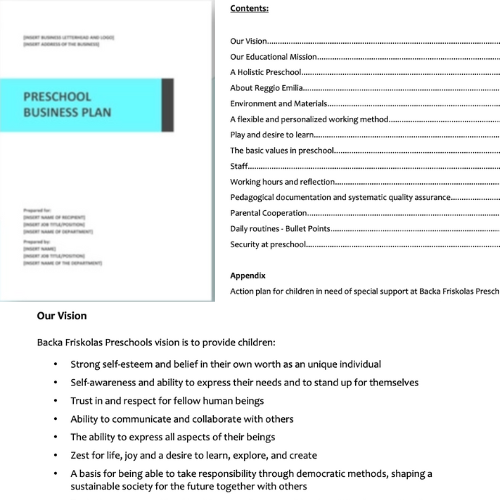
1.  Preschool Franchise Business Plan Sample

The plan includes information on the preschool’s location, the franchise you’ve chosen, your budget, your preschool’s policies, the standards for hiring employees, and many other crucial details. The good news is that everything is handled for your preschool with the franchisor’s ongoing support and direction.

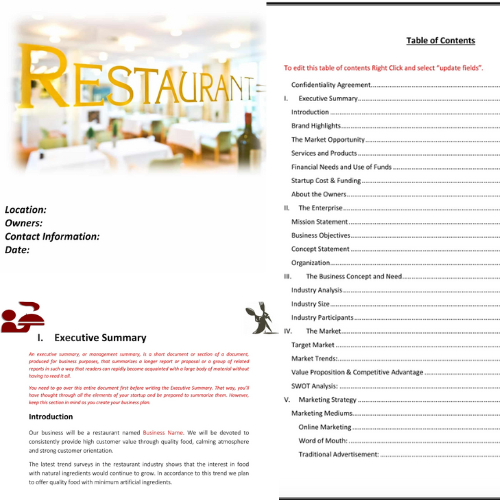
2. Restaurant Franchise Business Plan Sample

If you’re starting a restaurant, your business plan must consider the special requirements and services it will offer.

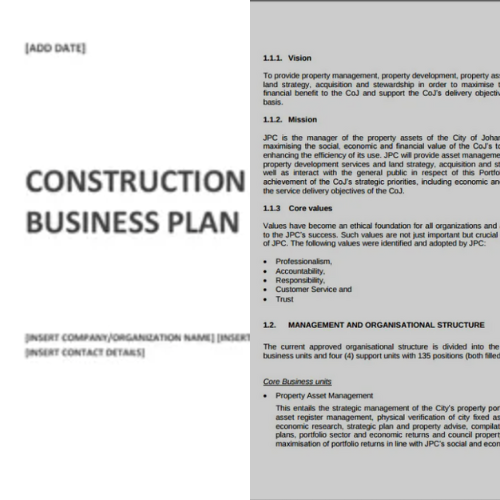
3.  Construction Franchise Business Plan Sample

Franchise Business plan samples

A successful construction business plan should include:

  • Create a system to generate a ton of client leads and project opportunities.
  • Create a quick-bidding estimating team.
  • Create a system for following up to negotiate and close sales.
  • Establish Project Management Procedures to Maintain Consistent Efficiency
  • Create Your Field Team and Provide Amazing Results on Every Project

Creating an effective Franchise Business Plan – 8 basic elements to generating a perfect Franchise Business Plan Sample.

Remember, the business strategy isn’t just about raising capital.

In addition to helping you secure financing, a business plan makes you think carefully about the investment you are about to make. It enables you to control your expectations and also anticipate the challenges of beginning a business.

As time passes and you gain experience as a franchise owner, you should update your business plan and utilize it as a guide to help you achieve your franchise goals.

Also, creating a perfect business plan doesn’t always have to be complicated.

8 Elements of a Franchise Business Plan are as below

1. The Executive Summary

An overview or summary of the crucial data you are supplying in your franchise business plan will serve as the first section of your document.

Because it will describe your business, the executive summary section should address the following:

  • What sort of need, service, or good does your business fulfil?
  • Is your business unique?
  • How will you ensure your company’s success?
  • What skills do you possess that will help the business succeed?

The reader’s first impression of you, your company, and your business plan will be formed by the executive summary. It is a written version of your executive summary. It should succinctly describe your company and all it offers in a way that sets your idea apart.

Give the lender a rundown of the franchise’s background. Also, you will include a brief description of the franchise’s service or item (more detailed information will be given in the next section).

2. Company information

Give the lender a rundown of the franchise’s background. Also, you will include a brief description of the franchise’s service or item (more detailed information will be given in the next section).

3. Describe your product or service

Give clients a detailed description of the service or product your franchise will offer. The corporate description and also this part can be combined.

4.  Market Research

Show the possible lender in this part that you are not entering a business endeavor impulsively by using the information provided. Thus, focus on the particular region (market) where the franchised business will be situated.

Talk about the following briefly:

  • What size of your market?
  • Who, in terms of both money and demographics, makes up this market?
  • Is the market for this service/product underserved?
  • In the event that there is competition, who are your rivals, and what sets you apart from them?
  • Explain the trends and growth prospects that experts foresee for the service or product in your niche market (which can include demographic, legislative, or environmental factors).

5.  Organisational structure

This section looks at the individuals who will be in charge of running the franchise on a daily basis, especially you as the owner. Whether this company will have multiple owners or operate as a sole proprietorship.

Specify whether you’ll be an active participant in day-to-day business operations or a passive owner.

Provide all business credentials for you as well as anyone else who has an ownership stake, if appropriate. Emphasize any and all expertise (even volunteer experience) that is necessary for future franchise operating success.

6.  Marketing strategy

The major query you address in this part is, “How are you going to obtain customers?” It provides an overview of the franchisor’s marketing efforts. It also outlines the instructions you will receive prior to opening. Often, required training includes seminars in sales and marketing..

7. Financials

The core of your company plan is this. Don’t just ask for the money you require in this part. Also, provide the lender a broad overview of your financial condition. Explain your strategy for recovering the entire initial investment. Often, a lender won’t pay the entire franchise investment cost. Are you using a combination of your own money and loans, credit, etc.?

8.  Appendix

The appendix, while technically not a part of the business plan, is a separate section where you can include materials that will improve your presentation. Add whatever information you think the lender needs to know about you and the franchise for which you are applying for financing. Resumes for managerial staff, tax returns, news pieces, etc. are some examples.

We have now understood the key elements of a franchise business plan, now let us take an example.

Example: Subway Franchise Business Plan Sample

If you are looking to start a franchise business in India, you need to understand how a business plan works.  When planning to start a subway franchise in India, you need to ask yourself these questions first:

  • Do you have the knowledge necessary to open a Subway sandwich shop?
  • What’s the yearly income of a Subway owner?

Now let us get into the Subway Franchise Business Plan Example.

  • Executive Summary of Subway Franchise
  • Products that Subway deals in
  • Subways Vision
  • Subways Mission
  • SWOT analysis – to identify key areas to target in order to achieve set goals
  • Strength or Workforce as it may be called
  • Weaknesses (if any)
  • Opportunities they are offering
  • Always be prepared for any uncertain threats, like natural calamities which cannot be predicted.
  • Targeted Market
  • Sales Projections annually.
  • Marketing & Sales provisions
  • What differentiates us from our rivals is our USP.

Therefore, you can use this as a template and the data from your feasibility study to create a plan that will help your company expand and remain stable.

Today, the recession has started hitting the economy and it won’t be too long before it hits hard.  If you have a strong franchise business plan in place, it will allow investors to easily maneuver towards choosing your business as a franchise.  Click here to know about some such sectors.

How To Create a Franchise Business Plan Sample PDF?

A franchise business plan is an essential tool for determining your goals. Hence, the document includes information on how to create a business plan as well as what its purpose is.

  • How will you go about it?
  • How much time will it take?
  • What is the cost of franchising your company?
  • How will the return payback be met?

This makes it a strategy document that will outline your complete franchising experience and serve as a projection of how the entire company will develop.

Also, it gives complete clarity regarding the amount of money and other resources needed to carry out your franchising. the duration required and the precise objectives stated within those time frames.

A franchise business plan is quite helpful when dealing with investors as well. This plan is carefully examined by banks and also other private investors who calculate your net worth.

This business plan is made so a franchisee who is considering your enterprise may comprehend what your enterprise’s profile is.

  • What kinds of franchisees are ideal?
  • How much money do you have?
  • what you could afford to spend
  • What is the potential risk you face?

The essential thing to remember is this strategy is mostly useful internally. Only when both parties think it necessary should it be disclosed to franchisees.

FAQs

Q.1. What is the outline of a Franchise Business Plan?

An executive summary, an explanation of your products and services, a marketing as well as sales strategy, operational details, financial predictions, and an appendix are common components of a classic business plan.

Q.2 Why do you need a Franchise Business Plan?

If you want to convince lenders that you deserve their money, you must write a business plan. Lenders use the business plan as a benchmark to determine whether a prospective franchisee is likely to be successful and also profitable.

Q.3.  Why create a business strategy in the first place?

A company plan’s principal objective is to outline your future goals. These plans should specify the steps your company will take to reach each goal or milestone. By creating a path to your objectives, you can decide on your company’s focus and also seek growth.

Conclusion,

It can be challenging to develop a franchise model for your already successful company. Business owners frequently have a hazy picture of how to franchise a business or run a franchise in their minds.

They will connect because they are all isolated dots. You must get the aid of a qualified consultant to assist you in developing a franchise business plan for your enterprise.

They ought to be able to aid you to connect the gaps as well as reveal several blind spots thanks to their knowledge.

Also, our professionals at Sparkleminds can assist you in creating a thorough and competent business plan. Furthermore, give us a call right now, and we’ll be happy to help you begin the franchising process for your company.

Loading