
Written By: Resham Daswani, Sparkleminds Editorial Team – Updated August 2026
Apne Business Ko Franchise Kaise Kare? Quick Answer
Apne business ko franchise karne ke liye sabse pehle ye check karna hota hai ki aapka business scalable, profitable and also repeatable hai ya nahi. Iske baad franchise business model develop karna, SOPs banana, franchise fee aur royalty structure decide karna, brand aur legal documentation ready karna, franchisee training system banana aur suitable franchise partners identify karna hota hai.

Simple words mein, apne business ko franchise kaise kare ka answer sirf “franchise dena shuru kar do” nahi hai.
Aapko apne existing business ko ek replicable business system mein convert karna hota hai jise ek trained franchise partner aapke brand standards ke according doosre city mein bhi operate kar sake.
Franchising in India can be particularly beneficial for business expansion for businesses that already have a proven client base, defined operating processes and a business plan that can be copied across locations. Current franchise guidance also promotes company validation, systemisation, brand strength and franchise planning before development.
Business Ko Franchise Kaise Kare? Sabse Pehle Ye Samjhein
Franchising ka matlab hai kisi entrepreneur ko aapke brand name, business model, systems, processes, products or also services ka use karne ka contractual right dena.
Aap franchisor hote hain.
Jo entrepreneur aapke brand ke under business operate karta hai, moreover, woh franchisee hota hai.
Franchisee generally outlet setup aur business operations mein investment karta hai, while franchisor provides the brand, operating system, training, support and other agreed resources.
Depending on your model, franchisor revenue may come from:
- Franchise fee
- Royalty
- Product or supply margins
- Marketing contribution
- Technology or also support fees
- Other agreed commercial arrangements
The exact commercial structure should be based on your business economics rather than copied from another franchise brand.
Kya Har Business Ko Franchise Kiya Ja Sakta Hai?
Nahi. Har business franchise-ready nahi hota.
This is one of the most important questions a business owner should answer before searching for “apne business ko franchise kaise kare.”
Your business should ideally have:
- Proven demand
- Consistent sales
- A clearly defined operating model
- Repeatable processes
- A strong value proposition
- Reasonable profitability
- Customer retention or also repeat business
- Potential to operate in other markets
- Systems that can be taught to another operator
Agar business ka pura operation aapki personal presence par depend karta hai, to pehle us business ko systemise karna zaroori hai.
Therefore, Franchise tabhi scalable hoti hai jab business owner ke bina bhi business model reasonably operate kiya ja sake.
Apne Business Ko Franchise Mein Kaise Convert Kare?
Business ko franchise mein convert karna basically business systemisation + franchise model development ka process hai.
1. Apne Business Ka Franchise Feasibility Check Karein
Sabse pehle analyse karein:
Kya mera business franchise ke liye suitable hai?
Check:
- Current revenue
- Profitability
- Customer demand
- Competition
- Operational complexity
- Investment requirement
- Scalability
- Market potential
Aapko ye bhi identify karna chahiye ki aapka business kis type ke franchisee ke liye suitable hoga.
For example, a food brand may require an operator with strong outlet-management skills, while an education or consulting business may require a franchise partner with local networking and sales capabilities.
Franchise Model Kaise Banaye?
A successful franchise model sirf franchise fee decide karne se nahi banta.
Moreover, aapko decide karna hota hai:
- Franchisee kya invest karega?
- Franchisor kya provide karega?
- Franchisee outlet kaise operate karega?
- Royalty kaise calculate hogi?
- Territory kaise define hogi?
- Training kaun provide karega?
- Marketing ka responsibility kiska hoga?
- Quality control kaise hoga?
- Franchise agreement mein kya terms hongi?
Therefore, aapka franchise model financially attractive for the franchisee aur commercially sustainable for the franchisor dono hona chahiye.
Franchise Business Model Kaun Sa Choose Kare?
Different businesses may require different structures.
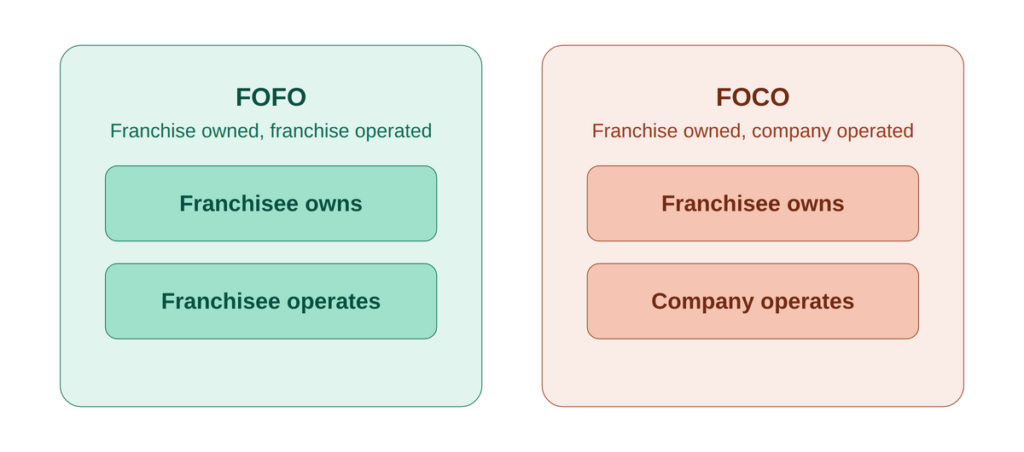
FOFO Franchise Model Kya Hai?
FOFO – Franchise Owned, Franchise Operated
Is model mein franchisee investment karta hai aur outlet ko operate bhi karta hai.
Moreover, this can work well where the franchisor has established SOPs and wants franchise partners to manage local operations.
FOCO Franchise Model Kya Hai?
FOCO – Franchise Owned, Company Operated
Franchisee investment provide karta hai, while company operations mein greater control rakhti hai.
This model can be considered where operational consistency is particularly important.
Company-Owned Model vs Franchise Model
Company-owned outlets offer more direct management, but require the business owner to put up more capital in each shop.
Franchising can help a brand grow with the use of franchise partner finance and local involvement, but it also comes with the duty of managing franchise partnerships and maintaining brand standards.
Apne Business Ki Franchise Dene Ke Liye Kya Chahiye?
A business owner ko franchise launch karne se pehle several components prepare karne chahiye.
- Strong Brand Identity: Your logo, visual identity, positioning, customer experience as well as marketing communication should be standardised.
- Proven Business Model: A franchisee should understand what they are investing in and also how the business operates.
- SOPs and Operations Manual: Every important process should be documented.
- Franchise Financial Model: Investment, fees, recurring costs as well as commercial arrangements should be clearly defined.
- Franchise Agreement: The legal relationship between franchisor as well as franchisee should be appropriately documented.
- Training System: Franchisees and their employees need structured training.
- Franchise Support System: The franchisor needs to determine what support continues after the outlet launches.
Franchise SOP Kaise Banaye?
SOP – Standard Operating Procedure – franchise business ka backbone hota hai.
Aapko document karna chahiye:
- Store opening process
- Store closing process
- Customer handling
- Sales process
- Product/service delivery
- Staff recruitment
- Staff training
- Inventory management
- Vendor management
- Quality checks
- Complaint handling
- Marketing process
- Reporting system
Further, think about this question:
“Agar main kal apne business se completely remove ho jaun, kya ek trained person is business ko meri system ke according chala sakta hai?”
Agar answer “no” hai, your business probably needs more systemisation before franchising.
Franchise Dene Mein Kitna Kharcha Aata Hai?
This is another important search question for business owners.
Franchise development ki koi single fixed cost nahi hoti.
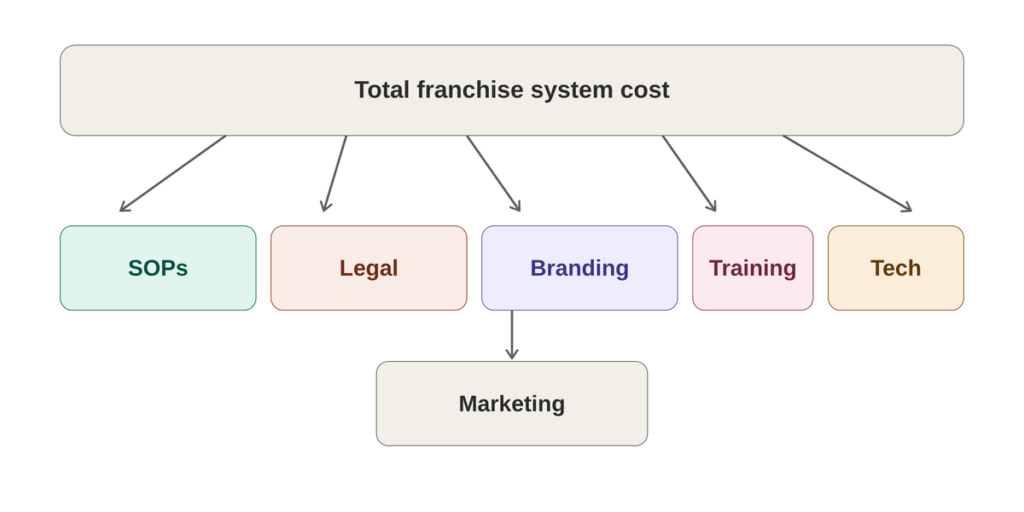
The investment required can vary based on:
- Industry
- Business size
- Existing systems
- Number of outlets
- Legal requirements
- SOP development
- Technology
- Training
- Branding
- Franchise marketing
- Consultant requirements
A small service business and a multi-location restaurant chain will obviously require different levels of franchise preparation.
Instead of asking only “franchise banane mein kitna paisa lagega?”, business owners should calculate the cost of building a complete franchise system.
Franchise Agreement Kaise Banaye?
“Franchise agreement kaise banaye?” is an important commercial and legal question.
The agreement should clearly define matters such as:
- Franchise rights
- Territory
- Franchise term
- Fees
- Royalty
- Brand usage
- Intellectual property
- Operating standards
- Training
- Marketing responsibilities
- Supplier arrangements
- Reporting requirements
- Renewal
- Termination
- Confidentiality
- Dispute-related provisions
Indian business owners should work with qualified legal professionals for franchise documentation rather than relying on generic agreements downloaded from the internet.
Franchise Kaise De? Franchise Partner Kaise Dhunde?
Once your franchise model is ready, the next question becomes:
“Franchise kaise deni hai aur franchise partner kaise milega?”
This is where many business owners make a mistake.
Don’t select a franchisee only because they have the money.
Look for:
- Financial capability
- Business understanding
- Local market knowledge
- Sales ability
- Operational commitment
- Brand alignment
- Willingness to follow SOPs
- Long-term business mindset
The right franchise partner can become an important growth asset.
The wrong franchise partner can create operational problems and potentially damage your brand reputation.
Business Ko India Mein Kaise Expand Kare Through Franchising?
Once your business becomes franchise-ready, you can create a structured India expansion strategy.
Instead of randomly accepting franchise enquiries, identify priority markets.
Tier 1 Cities
Large markets can provide strong demand but may also involve:
- Higher rentals
- Higher competition
- Higher operating costs
Tier 2 Cities
These can offer opportunities for brands that understand local customer demand and price sensitivity.
Tier 3 Cities
For selected business categories, smaller cities can provide opportunities where organised branded offerings are still developing.
Your city expansion strategy should consider:
market demand + competition + investment + rental cost + local purchasing power + franchisee availability.
Franchise Business Expansion Mein Market Research Kyun Zaroori Hai?
Before entering a new city, ask:
Kya mere product ya service ki demand wahan hai?
Research:
- Local competitors
- Customer demographics
- Pricing
- Existing brands
- Property availability
- Rental levels
- Local purchasing power
- Supply chain
- Franchise partner availability
Market research and feasibility analysis are repeatedly highlighted in franchise-development guidance because they help determine whether the model can be replicated and whether a particular market is suitable.
Apne Business Ko Franchise Karne Ke Fayde Kya Hain?
Franchising can offer several potential advantages for established business owners.
- Business Expansion Without Funding Every Outlet Yourself: Franchisees generally invest in establishing their own locations, reducing the need for the franchisor to fund every outlet directly.
- Faster Market Expansion: A franchise network can allow a brand to establish a presence in multiple markets more quickly than relying exclusively on company-owned outlets.
- Local Business Knowledge: Franchise partners can bring knowledge of local customers, competition and market conditions.
- Recurring Revenue Potential: Depending on the commercial structure, franchisors may generate franchise fees, royalties or supply-related revenue.
- Stronger Brand Presence: Successful franchise outlets can increase brand visibility and create opportunities for further expansion.
However, franchising should never be treated as “easy passive income.”
A franchisor still has to invest in training, support, marketing, quality control and franchise relationship management.
Franchise Business Mein Business Owners Ko Kaunsi Mistakes Avoid Karni Chahiye?
Business Profitably Prove Hone Se Pehle Franchise Karna
A business should ideally have enough operating history and evidence that its model works.
- SOPs Na Banana: Without proper SOPs, every franchise outlet may operate differently.
- Sirf Franchise Fee Ke Liye Franchisee Select Karna: The highest-paying applicant isn’t necessarily the best franchise partner.
- Unrealistic ROI Promise Karna: Franchise economics should be transparent and based on reasonable assumptions.
- Legal Documentation Ignore Karna: A poorly structured franchise relationship can create disputes later.
- India Mein Random Expansion Karna: Every city is not necessarily the right market for your brand.
- Franchisee Support Ignore Karna: Your responsibility doesn’t end when the franchise agreement is signed.
Apne Business Ko Franchise Karne Se Pehle Ye 10 Questions Puchhein
Before starting your franchise journey, ask:
- Kya mera business profitable hai?
- Kya mera business repeatable hai?
- Kya meri SOPs ready hain?
- Kya mera brand legally protected hai?
- Kya doosra entrepreneur mera model successfully operate kar sakta hai?
- Franchisee ko kitni investment karni hogi?
- Franchise fee aur royalty kaise structure karunga?
- Main franchisee ko kitna training aur support dunga?
- Kaunse Indian cities mere expansion ke liye suitable hain?
- Kya mujhe franchise consultant ki professional support chahiye?
If you cannot answer several of these questions, your business may need additional preparation before launching its franchise model.
Final Takeaway: Apne Business Ko Franchise Kaise Kare?
Apne business ko franchise karna ek structured business expansion strategy hai—not simply a way to sell franchise outlets.
A successful franchise brand is built on:
Strong Business + Scalable Model + SOPs + Brand + Financial Structure + Legal Framework + Training + Franchisee Support + Right Expansion Strategy
Agar aapka business profitable hai, customer demand proven hai aur operations ko standardise kiya ja sakta hai, franchising could become a powerful route to expand your brand across India.
The most important question is therefore not just:
“Apne business ko franchise kaise kare?”
It is:
“Kya mera business franchise ke through sustainably scale hone ke liye ready hai?”
If the answer is yes, the next step is to build the right franchise model before you start looking for franchise partners.
Want to turn your existing business into a scalable franchise brand? Connect with Sparkleminds to explore your franchise expansion strategy in India.
FAQs
Apne business ko franchise kaise kare?
Apne business ko franchise karne ke liye business feasibility check, franchise model development, SOP creation, financial structuring, legal documentation, training, franchise support and franchisee selection ki process follow karni hoti hai.
Aap apne business ki franchise kaise de?
Pehle business ko franchise-ready banayein, commercial model and franchise documentation prepare karein, suitable franchise partners identify karein aur structured onboarding and training process establish karein.
Business ko franchise mein convert kaise kare?
Business ko franchise mein convert karne ke liye existing operations ko systemise aur document karein, brand standards define karein, franchise economics develop karein and ensure karein ki model different locations mein replicate ho sake.
Franchise business model kaise banaye?
Investment requirements, franchise fee, royalty, territory, operating duties, training, marketing and ongoing support structure define karna hota hai for franchise model banane ke liye.
Franchise dene ke liye kya chahiye?
Aapko generally a proven business model, strong brand, SOPs, franchise economics, appropriate legal documentation, training system and franchisee-support framework ki zarurat hoti hai.
Franchise business kaise start kare?
Agar aap existing business owner hain, franchise business start karne ka first step franchisee dhoondhna nahi, balki apne existing business ko franchise-ready banana hai.
Franchise kaise beche?
Franchise ko sirf sales product ki tarah sell karne ke bajay, business owners ko suitable franchise partners identify karke unhe transparent investment, operating model, support and commercial information provide karni chahiye.
Ek franchise business mein royalty kya hoti hai?
Royalty is an ongoing commercial payment that a franchisee may pay to the franchisor according to the agreed franchise structure. It may be calculated as a percentage of sales, a fixed amount or another agreed mechanism.