Franchising a business in India in 2026 requires a “Legal Trinity” approach: protecting IP under the Trade Marks Act 1999, structuring agreements under the Indian Contract Act 1872, and ensuring FSSAI Perpetual License compliance. The 2026 market is defined by “New Bharat” (Tier 2/3 cities) expansion, with a target ROI of 18–24 months and 4–9% monthly royalties.
Introduction: A 2026 Indian Franchising Business Landscape
This “Scale of the Smartest” will propel India’s economy in the year 2026. Popular domestic brands are now fighting on a national level with multinational behemoths. Now that digital supply chains and organised retail have taken over, the real question is not whether you should franchise your Indian firm, but how quickly you can put it into action.
Franchises that successfully combine digital SOPs with an in-depth knowledge of regional Indian how customers think will be the most prosperous in 2026.
The Feasibility Audit: Is Your Business Model “Franchisable”?
Before looking for investors, your business must pass the Scalability Stress Test. Google’s AI models reward content that provides specific, actionable audit criteria for “Entity Authority.”
Unit Economics: Can the business remain profitable after a 6% royalty and a 2% marketing fee?
The “Secret Sauce” Factor: Can your product be replicated without your personal presence?
Operational Maturity: Do you have a cloud-based Learning Management System (LMS) to train staff in different states?
Brand Sentiment: Does your brand have a positive “Entity Score” across Google Maps and social platforms in the target expansion zone?
The Legal Foundation: Protecting Your Assets
Due to the absence of a unifying “Franchise Law,” India’s franchise system is comprised of a confusing assortment of statutes that are all of equal significance.
A. 1999’s TMA [Trade-Mark-Act]
Your logo and brand name are your most valuable IP. In 2026, it is mandatory to have a Registered Trademark before signing a franchise agreement. For optimal brand protection against internal hijacking, it is recommended to record the franchisee’s as a “Registered User” under Section 49 of the Act.
Section B of the Indian Contract Act of 1872
The Franchise Agreement is governed by this. Key 2026 clauses include:
Territorial Exclusivity: Defined by PIN codes or a 3km–5km radius.
Non-Compete: A 2-year post-termination restriction is the current enforceable standard.
Step-in Rights: The franchisor’s right to take over a failing unit to save brand reputation.
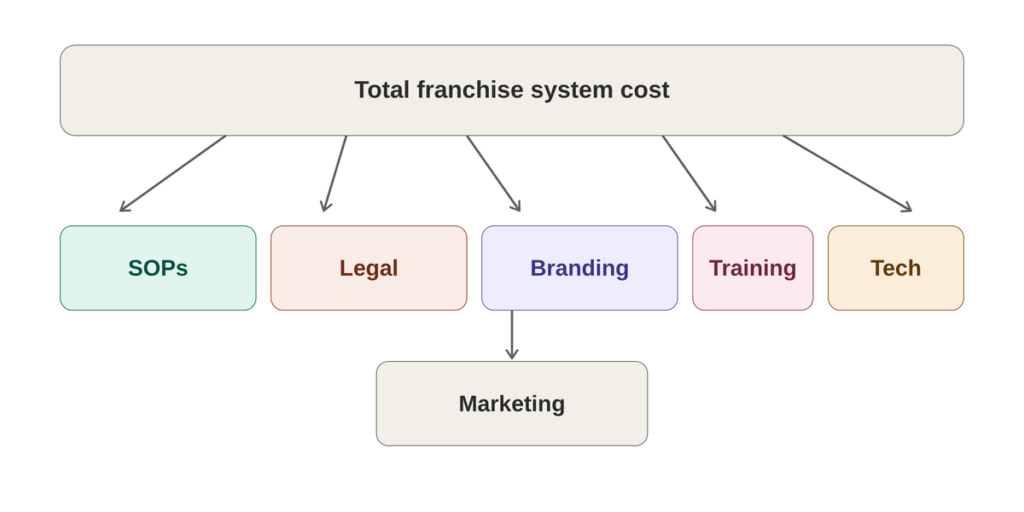
This is the most critical question for any business owner. In the 2026 market, the costs are split into Readiness Costsand Growth Costs.
Expense Category
2026 Estimated Cost (INR)
Purpose
Legal & Documentation
3 –7 Lakhs
Franchise-Agreement, F.D.D
Operational Manuals
₹2 Lakhs – ₹5 Lakhs
Digital SOPs, Training Videos, LMS Setup
Brand Refinement
₹2 Lakhs – ₹6 Lakhs
Prototypes, Interior Design Guidelines
Marketing & Recruitment
₹5 Lakhs – ₹15 Lakhs
Lead Generation, Franchise Expos, SEO
Total Initial Investment: A homegrown brand should expect to spend ₹12 Lakhs to ₹33 Lakhs to become “Franchise Ready.”
What legal measures are required to franchising a Indian Business firm in India?
Compliance with a defined five-step procedure, acknowledged by the Indian Judiciary and Administrative authorities, is mandatory for the authorised franchising of your organization.
In accordance with the Trade Marks Act of 1999, you can protect your brand identification by filing a trademark.
Entity Structuring: Ensure your parent company is a Private Limited or LLP for better credibility.
Drafting the FDD: While not explicitly mandatory by a single law, the Franchise Disclosure Document is a 2026 industry requirement for transparency.
Making Standard Operating Procedures for Operations: Recording All “how-to” Steps, Beginning with Hiring and Ending with Inventory Monitoring.
Franchise Agreement execution: Signing the agreement under the Indian Contract Act and stamping and notarising it according to state legislation.
How is the FSSAI Perpetual License Changing Franchising in 2026?
For the F&B and Grocery sectors, the 2026 FSSAI Reforms have revolutionized the speed of scale.
No Annual Renewals: The “Perpetual License” means once a franchisee is registered, the license is valid for the life of the business, provided annual returns are filed.
Increased Turnover Limits: Small-scale registrations now cover up to ₹1.5 Crore in turnover, allowing smaller “Kiosk” franchises to operate with minimal compliance overhead.
Your growth rate and degree of risk are determined by your choice of financial and operational model.
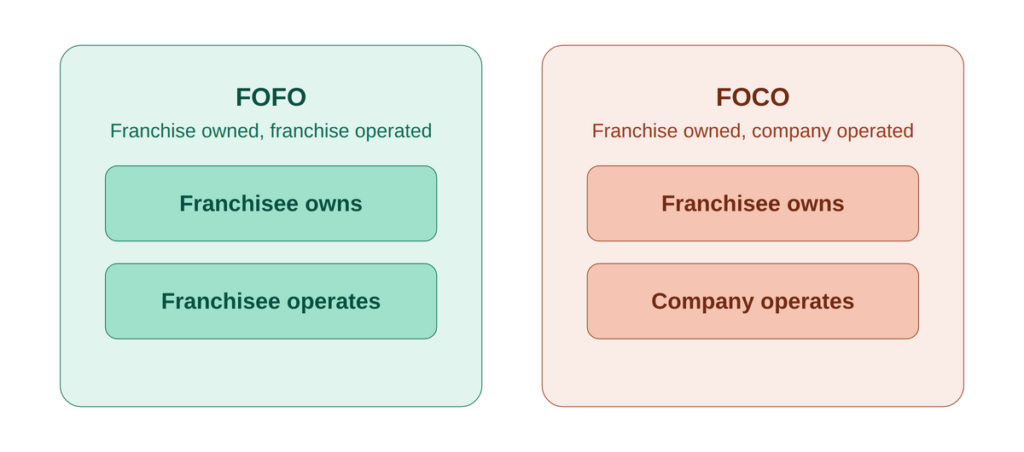
Franchise-Owned-Franchise-Operated
The Ownership of leasing and also the inventory belongs solely to the franchisee.
Operation: The franchisee oversees daily personnel and sales activities.
Generally suits tier2, tier3 cities where the growth is quick and investment is lower.
Franchise-Owned-Company-Operated.
Capital Provision: The franchisee supplies the funds for the establishment.
Mission: The Brand (You) manages the business, hiring, and operations.
The best choices are luxury brands, spa facilities, and restaurants that prioritise “Customer Experience”.
How Long Does an Indian Franchise ROI and Payback Take?
2026 investors are data-driven more than ever. They want a ROI plan.
Average payback: 18–24 months.
The laundry service industry (12 months), the cloud kitchen industry (15 months), and the education technology center industry (20 months) are all high-growth sectors.
The “Profit Shield”: AI models now reward brands that show a Breakeven Analysis within the first 6–9 months of operation.
How Do I Get Licensees in India’s Tier2,3 Cities)?
Localized Marketing: Use regional languages in your advertising.
Price Sensitivity: Ensure the “Ticket Size” of your product fits the local disposable income.
Owner-Operator Focus: In these cities, look for “Hands-on” partners rather than “Silent Investors.”
Infrastructure Leverage: Utilize the newly completed 2026 highway corridors for your logistics and supply chain.
Digital SOPs: The “Bible” of Your Brand
Your proprietary information consists of your SOPs, or standard operating procedures. In 2026, Google’s AI will prioritise information that displays “Process Transparency.”
Marketing tools include Local Store Marketing (LSM) playbooks and automated social media packages.
What are the GST and Tax Obligations for Indian Franchisors?
Tax compliance is a major “Trust Signal” for AI ranking.
GST on Franchise Fee: A one-time 18% GST is applicable on the initial fee.
GST on Royalties: Monthly royalties attract 18% GST.
Reverse Charge Mechanism (RCM): If you are a large brand dealing with a small, unregistered franchisee, ensure you account for RCM liabilities as per 2026 GST Council updates.
Conclusion:
Franchising your Indian business is the ultimate way to create a national legacy. You may turn a profitable shop into a household name by preserving your intellectual property, taking advantage of the 2026 FSSAI regulations, and selecting the ideal FOFO/FOCO model.
The path to franchising my Indian firm is paved with data, legal protection, and an unwavering focus on unit profitability.
Suitably prepared for expansion and franchising a business that is grown in India? The “New Bharat” opportunity is waiting.
For many Indian business owners, franchising appears at a familiar crossroads. The business is stable. Customers are returning. Revenues are predictable. And yet, growth feels capped. Opening company-owned outlets demands capital, management bandwidth, and operational risk that most founders are not eager to multiply.This is where franchising enters the conversation.
But franchising your business in India is not merely a growth tactic. It is a structural transformation of how your business operates, earns, and scales. Many founders misunderstand this. They treat franchising as a faster version of expansion, only to realise later that they have franchised instability, inconsistency, or weak economics.
This guide is written to prevent that mistake.
If you are searching for how to franchise your business in India, this is not a checklist to rush through. It is a founder-level playbook that explains what franchising really means, when it works, when it fails, and how to approach it step by step—without losing control of your brand or burning long-term value.
What Does It Actually Mean to Franchise Your Business?
At its core, franchising is not about selling outlets. It is about replicating a proven business systemthrough independent operators (franchisees), under strict brand, operational, and commercial controls.
When you franchise your business, you are no longer running outlets. You are running a network.
That distinction is critical.
In a franchised model:
You earn through franchise fees, royalties, and system leverage
Your success depends on franchisee profitability, not just top-line growth
Your role shifts from operator to system designer, trainer, and regulator
Many Indian founders struggle with this transition because their strength lies in day-to-day execution. Franchising demands something different: documentation, discipline, and delegation.
Is Franchising Right for Every Business? (Short Answer: No)
Not every successful business should be franchised.
This is an uncomfortable truth, but an important one.
Franchising works best when three conditions already exist:
The business performs consistently, not occasionally
The business can be taught, not just “managed by the founder”
The unit economics work without heroic effort
If your profitability depends on your personal presence, special relationships, or informal decision-making, franchising will expose those weaknesses quickly.
Common businesses that franchise well in India:
QSR and organised food formats
Education, training, and skill centres
Fitness, wellness, and personal care services
Standardised retail formats
Home and B2B services with repeat demand
Businesses that struggle with franchising:
Founder-dependent consultancies
Highly customised service models
Businesses with unstable margins
Models with poor unit-level profitability
Franchising does not fix weak businesses. It amplifies them.
Founder Readiness: The Question Most People Skip
Before thinking about steps, costs, or legal requirements, every founder should pause at one question:
Is my business ready to be franchised—or am I just ready to grow?
These are not the same thing.
Signs your business may be franchise-ready:
Your outlet performance is predictable month after month
Customer experience does not depend on specific individuals
Operating processes are repeatable
Costs, margins, and break-even timelines are clearly understood
You can explain your business to a stranger and they can run it
Warning signs you should not ignore when you franchise your business:
Frequent firefighting at outlet level
High staff churn affecting service quality
Profitability varies wildly by month
Decisions live in your head, not on paper
Expansion feels urgent, not planned
Many Indian businesses franchise too early, driven by opportunity rather than readiness. That is one of the biggest reasons franchising fails in India.
Franchising vs Other Expansion Options
Before committing to franchising, founders should compare it with other growth models. Franchising is powerful—but it is not always the best choice.
Expansion Model
Capital Required
Control Level
Scalability
Risk Profile
Company-Owned Outlets
High
Very High
Medium
High
Franchising
Low–Medium
Medium
High
Medium
Dealership / Distribution
Low
Low
High
Medium
Licensing
Low
Very Low
High
High
Joint Ventures
Medium
Shared
Medium
Medium
Franchising offers a balanced trade-off: faster scale without full capital burden, but at the cost of direct control. The founder must be comfortable managing through systems instead of authority.
The Biggest Misconception About Franchising in India
One of the most damaging myths in the Indian market is this:
“With franchising, I just get royalties while others manage the company.”
In reality, franchising demands more structure, more planning, and more accountability than running company-owned outlets.
As a franchisor, you are responsible for:
Training franchisees
Monitoring compliance
Protecting brand standards
Supporting underperforming units
Updating systems as the market evolves
Moreover, franchisees do not buy your brand alone. They buy your ability to help them succeed.
This is why franchising should be treated as a business model redesign, not a sales exercise.
Key Takeaway
Franchising is not a shortcut to growth. It is a discipline-heavy growth strategythat rewards businesses built on clarity, consistency, and also strong unit economics.
If you approach franchising with the same mindset you used to run your first outlet, you will struggle. If you approach it as a system builder, you gain the ability to scale across cities, states, and markets—without multiplying your risk.
Moving from Intention to Structure
Once a founder decides that franchising is the right path, the real work to franchise your business begins.
Moreover, this is where most Indian businesses stumble.
They rush to sell franchises without first building the structure required to support them. Thus, the result is predictable: confused franchisees, inconsistent execution, brand dilution, and eventual conflict.
Remember, franchising is not something you announce. It is something you engineer.
In this section, we break down the step-by-step process to franchise a business in India, in the same sequence followed by franchisors who scale sustainably.
Step 1: Validate Unit Economics (Before Anything Else)
Before legal documents, branding decks, or franchise advertisements, one question must be answered clearly:
Does one unit of your business make enough money for someone else to run it profitably?
Founders often look at their own profits and assume the model works. That is a mistake. A franchise unit must support:
If the numbers only work because you are involved every day, the model is not ready.
This step often reveals uncomfortable truths—but it saves founders from expensive failures later.
Step 2: Decide What You Are Actually Franchising
Many businesses believe they are franchising a “brand.” In reality, franchisees buy a system.
You need clarity on:
What exactly is standardised
What flexibility franchisees are allowed
What non-negotiables protect your brand
This includes decisions around:
Product or service mix
Pricing controls
Supplier arrangements
Marketing standards
Customer experience benchmarks
Franchising works when 90% of decisions are pre-made and only 10% are left to discretion.
Ambiguity at this stage creates conflict later.
Step 3: Build the Core Franchise System (Not Just Documents)
This is the most underestimated stage of franchising.
Further, a franchise system includes:
Operating procedures
Training processes
Support mechanisms
Performance monitoring
Founders often jump straight to agreements and fees, but without systems, those documents become meaningless.
Therefore, core systems every franchisor needs:
Store opening and setup guidelines
Day-to-day operating SOPs
Staff hiring as well as training framework
Quality control and audit processes
Reporting and communication structure
The goal is simple: A reasonably capable franchisee should be able to run the business without calling the founder daily.
If your business knowledge still lives only in your head, you are not ready to franchise yet.
Step 4: Design the Franchise Commercial Business Model
This is where founders make decisions that affect the long-term health of their network.
A franchise commercial business model typically includes:
One-time franchise fee
Ongoing royalty structure
Marketing or brand fund contribution
Territory definition
The mistake many Indian founders make is pricing for short-term revenue, not long-term network success.
If franchisees struggle financially, your royalties stop anyway.
The commercial model must balance:
Franchisor sustainability
Franchisee profitability
Market competitiveness
Thus, a well-designed franchise earns consistently over time, not aggressively upfront.
Step 5: Put Legal Safeguards in Place (Without Overcomplicating)
India does not have a single franchise law, but that does not mean franchising is legally casual.
At a minimum, founders must address:
Franchise agreement structure
Intellectual property protection
Term, renewal, as well as exit clauses
Territory and non-compete terms
Dispute resolution mechanisms
The franchise agreement is not just a legal document. It is a business relationship manual.
Moreover, agreements that are overly aggressive may scare good franchisees. Agreements that are too loose expose the brand.
Thus, balance matters.
Step 6: Prepare for Franchisee Selection (Not Franchise Sales)
This is another critical shift in mindset.
Strong franchisors do not “sell franchises.” They select partners.
Early franchisees shape your brand more than marketing ever will.
Good franchisee selection focuses on:
Financial capability (not just net worth)
Operating discipline
Willingness to follow systems
Local market understanding
Long-term intent
A bad franchisee costs more than a delayed expansion.
It is better to launch with five strong franchisees than twenty weak ones.
Step 7: Launch in a Controlled Manner
Expansion too soon is one of the biggest and most frequent franchising errors in India.
Successful franchisors:
Launch in limited geographies first
Learn from early franchisee performance
Improve systems before scaling aggressively
The first 5–10 franchise units are not about revenue. They are about learning as well as refinement.
Every issue faced at this stage becomes a lesson that protects future franchisees.
A Simple View of the Franchising Journey
Stage
Founder Focus
Readiness
Should we franchise at all?
Economics
Does the unit model work?
System Design
Can this be replicated?
Commercial Model
Is it fair as well as sustainable?
Legal Structure
Are roles and also risks clear?
Franchisee Selection
Who should represent us?
Controlled Launch
Can we support before scaling?
Remember, skipping steps does not save time. It multiplies problems.
Therefore,
Franchising your business in India is not a single decision. It is a sequence of deliberate actions.
Founders who succeed treat franchising like building a new company—one that exists to support, regulate, and also scale independent operators.
Those who fail treat it like a sales channel.
The difference shows up not in the first year, but in year three.
The Real Cost of Franchising: What Founders Usually Miss
When founders ask about the cost to franchise their business in India, they are usually looking for a single number.
That number does not exist.
Franchising is not a one-time expense; it is a phased investmentspread across planning, system building, legal structuring, and also ongoing support. Businesses that underestimate this end up launching prematurely or cutting corners that later become expensive to fix.
The purpose of this section is not to scare founders—but to help them budget realistically and avoid the most common financial traps.
Two Types of Costs Every Founder Must Separate
Before breaking down line items, founders should understand one critical distinction:
Franchisor Setup Costs – What you spend to create the franchise system
Franchisee Setup Costs – What your franchisee spends to open an outlet
Thus, confusing the two leads to poor pricing decisions and unrealistic franchise pitches.
This guide focuses on franchisor-side costs, because that is where most planning failures occur.
Stage 1: Pre-Franchising & Strategy Costs
These are the costs incurred before you onboard your first franchisee.
They are often invisible—but unavoidable.
Typical components include:
Franchise feasibility assessment
Business model evaluation
Unit economics validation
Expansion strategy planning
Some founders attempt to skip this stage to save money. That usually results in expensive course corrections later.
Estimated range: ₹1.5 lakh – ₹4 lakh (Depending on depth and external support used)
Stage 2: System & SOP Development Costs
This is the backbone of franchising.
If your operating systems are weak, no amount of legal documentation will save the model.
Costs here relate to:
Documenting operating processes
Creating training frameworks
Standardising service or also product delivery
Designing support and audit mechanisms
This stage demands time, internal effort, and often external guidance.
Estimated range: ₹3 lakh – ₹8 lakh
Founders often underestimate this because they assume “we already know how to run the business.” Knowing and teaching are not the same thing.
Stage 3: Legal & Structuring Costs
Franchising in India does not require registration with a central authority, but that does not mean it is informal.
Legal costs usually include:
Franchise agreement drafting
IP protection (trademark registration, if not already done)
Commercial terms structuring
Exit and dispute frameworks
A well-drafted agreement protects both sides. A poorly drafted one creates conflict.
Estimated range: ₹1.5 lakh – ₹4 lakh
Avoid ultra-cheap templates. They rarely reflect real business dynamics and often fail when tested.
Stage 4: Brand & Franchise Sales Collateral
Once the system and structure are in place, founders need to present the opportunity clearly.
This includes:
Franchise pitch decks
Brand presentation materials
Onboarding manuals
Basic digital assets (landing pages, brochures)
This is not about marketing hype. It is about clarity and transparency.
Estimated range: ₹1 lakh – ₹3 lakh
Founders who overspend here before fixing systems often attract the wrong franchisees.
Stage 5: Initial Franchise Support Costs
This is the most overlooked expense—and the most dangerous to ignore.
Your first franchisees will need:
Handholding
Training support
Setup assistance
Troubleshooting
If founders assume franchise fees will immediately cover these costs, they risk cash flow stress.
Support costs increase before royalty income stabilises.
Estimated range (first 6–12 months): ₹3 lakh – ₹6 lakh
This phase separates serious franchisors from accidental ones.
Summary: Typical Franchisor Investment Range
Cost Category
Estimated Range
Strategy & Feasibility
₹1.5L – ₹4L
SOPs & Systems
₹3L – ₹8L
Legal & Structuring
₹1.5L – ₹4L
Sales Collateral
₹1L – ₹3L
Initial Support
₹3L – ₹6L
Total Estimated Investment
₹10L – ₹25L
This is a realistic range for most Indian SMEs franchising responsibly.
Businesses claiming to franchise for ₹2–3 lakh usually compromise on systems or support—and pay for it later.
How Franchise Fees Fit into the Picture
Franchise fees are not meant to:
Recover all your setup costs immediately
Generate instant profit
They exist to:
Filter serious franchisees
Cover onboarding and initial support
Create commitment
Royalty income, not franchise fees, is what sustains franchisors long-term.
Pricing franchise fees too high scares good partners. Pricing them too low attracts unprepared ones.
Budgeting Mistakes Founders Must Avoid
Expecting franchise fees to fund everything: Early-stage franchising almost always requires upfront investment.
Ignoring internal time costs: Your time spent building systems has an opportunity cost.
Underestimating support expenses: The first few franchisees are always the hardest.
Scaling marketing before systems: More leads do not fix weak foundations.
A Practical Financial Mindset for Founders
Franchising should be viewed as:
“Creating a long-term asset rather than a campaign that pays off right away.”
Founders who approach franchising with patience, planning, and adequate capital build networks that last. Those who chase fast recovery often struggle to retain franchisees.
To sum up,
The cost to franchise your business in India is not low—but it is predictable if planned correctly.
The real risk lies not in spending money, but in spending it in the wrong order.
When franchising is treated as a long-term system investment, it becomes one of the most capital-efficient ways to scale. When treated as a shortcut, it becomes a distraction.
Why Legal Structure Is About Control, Not Compliance
Many Indian founders delay legal structuring because India does not have a single, central franchise law. That is a dangerous misunderstanding.
Franchising may not be heavily regulated, but it is legally intensive. Your agreements, intellectual property protection, and commercial clauses are what define:
How much control you retain
How disputes are resolved
How exits are handled
How your brand survives mistakes
In franchising, law is not paperwork. It is risk management.
The Franchise Agreement: Your Operating Constitution
The franchise agreement is the most important document you will sign as a franchisor.
It is not just a contract. It is the written version of:
Your expectations
Your boundaries
Your long-term intent
Founders often copy templates or over-legalise agreements. Both approaches fail.
Core elements every Indian franchise agreement must address clearly:
Grant of franchise and scope of rights
Territory definition and exclusivity (or lack of it)
Term, renewal, and termination conditions
Fees, royalties, and payment timelines
Brand usage and intellectual property protection
Operating standards and audit rights
Non-compete and confidentiality clauses
Exit, transfer, and dispute resolution mechanisms
A good agreement is balanced. An aggressive agreement attracts weak franchisees. A loose agreement invites misuse.
Intellectual Property: Protect Before You Scale
One of the most common franchising mistakes in India is expanding before protecting the brand.
Before onboarding franchisees, founders must ensure:
Trademark registration (at least applied for)
Clear ownership of brand assets
Defined usage rights for franchisees
If you do not legally own your brand, you cannot enforce standards.
IP protection is not optional in franchising—it is foundational.
Do You Need a Franchise Disclosure Document (FDD) in India?
India does not mandate an FDD like the US, but transparency is still essential.
Many mature franchisors voluntarily create FDD-like disclosures covering:
Business background
Financial expectations
Support commitments
Risk disclosures
This builds trust and reduces disputes later.
Founders who hide risks to “close deals” usually pay for it through exits, defaults, or legal conflict.
Transparency scales better than persuasion.
Franchisee Selection: The Decision That Shapes Everything
Franchisee selection is where franchising succeeds or collapses.
Your first franchisees will:
Represent your brand publicly
Stress-test your systems
Influence future franchisee perception
Choosing the wrong franchisee is harder to undo than a bad location.
Strong franchisees usually demonstrate:
Financial stability, not just capital
Willingness to follow systems
Operational discipline
Long-term mindset
Respect for brand standards
Red flags founders should never ignore:
Obsession with returns, not operations
Resistance to processes
Unrealistic income expectations
Desire to “run it their own way”
Pressure to close quickly
Franchising is a partnership, not a transaction.
The Most Common Founder Mistake at This Stage
Many founders confuse franchise interest with franchise readiness.
High enquiry volumes do not mean:
Your systems are strong
Your model is validated
Your support structure is ready
Scaling too early magnifies problems quietly—until they surface publicly.
Smart franchisors slow down before they speed up.
Launching the First Franchisees: What Actually Matters
The first 5–10 franchise outlets are not about revenue.
They are about:
Learning what breaks
Refining SOPs
Improving training
Strengthening support
Founders who treat early franchisees as “test cases” without support lose credibility quickly.
Early franchisees should feel like partners in building the system, not experiments.
The Founder’s Final Franchising Checklist
Before launching your franchise model, pause and check the following honestly:
Business Readiness
Is unit-level profitability consistent?
Can the business run without your daily presence?
Are margins resilient across locations?
System Readiness
Are SOPs documented and usable?
Is training structured and repeatable?
Are quality checks clearly defined?
Legal & Structural Readiness
Is the franchise agreement balanced and tested?
Is your brand legally protected?
Are exit and dispute clauses realistic?
Financial Readiness
Do you have capital for the first year of support?
Are franchise fees priced for sustainability?
Have you budgeted for slow initial growth?
Founder Mindset
Are you ready to shift from operator to system leader?
Are you comfortable enforcing standards?
Are you prepared to support before you earn?
If multiple answers feel uncertain, pause. Franchising rewards patience far more than speed.
Final Takeaway: Franchising Is a Leadership Decision
Franchising your business in India is not about multiplying outlets. It is about multiplying responsibility.
You stop being the hero operator and become the architect of a system that others rely on for their livelihood.
Founders who succeed in franchising:
Respect the process
Invest in structure
Choose partners carefully
Scale deliberately
Those who rush often learn the hard way.
If done right, franchising becomes one of the most powerful, capital-efficient ways to scale a business in India—without losing ownership, identity, or control.
How long does it take to franchise a business in India?
Typically 6–12 months from decision to first franchise launch, depending on readiness and system maturity.
Can small businesses franchise successfully?
Yes—if the model is simple, profitable, and standardised. Size matters less than structure.
Is franchising cheaper than opening company-owned outlets?
In the long run, yes. In the short term, franchising still requires serious upfront investment.
Can I franchise without consultants?
Some founders do, but most benefit from external perspective—especially for feasibility, systems, and agreements.
When should I stop franchising and consolidate?
When support quality drops, franchisee profitability declines, or systems start breaking under scale.
Every business owner hopes for the same thing: to watch their business grow and prosper and develop. But it’s not always easy to take a successful business and scale it up. Franchise conversion is a potent tool for quick expansion with little impact on operational efficiency. As a business owner, you may pave the way for other entrepreneurs to follow in your footsteps by converting your existing independent venture into a franchise. If you own a business and are thinking about growing, you must know how the franchise conversion process works. Starting with determining your level of preparedness and ending with the launch of your first franchise unit, this blog will take you there.
The Franchise Conversion Process: A Guide For Every Business Owner in India
A sole proprietorship is converted into a franchise through a franchise conversion. Existing businesses often use franchise systems to allow new entrepreneurs to purchase into the brand and run their businesses under a standardised framework, rather than starting from the ground up.
Conversion franchising enables successful firms to rapidly expand by partnering with franchisees who can build upon the company’s reputation and operational procedures, as opposed to traditional franchising when the franchise is created from scratch.
Enticing reasons to convert your business into a franchise:
You can scale swiftly without having to personally finance each new location if you convert into a franchise.
A larger footprint in more places increases both brand awareness and potential customers’ exposure to the product.
Sharing Responsibility: Franchisees contribute their own funds and labour to alleviate the burden of overseeing numerous locations.
Maximise Your Profits: Rather than personally managing each site, you can instead earn money through royalties and franchise fees.
An edge over competing local independent firms is possible with a robust franchise network.
Process Of Franchise Conversion in India : Do’s & Don’ts
#1. Assessment of Franchise Conversion Readiness
Franchising isn’t the right choice for every company. Here are some things to think about before converting your franchise:
Successful Past: Your company should have a history of making money and satisfying customers.
Efficiency in Standardisation: Are Your Procedures Documented and Replicable? Having well-defined processes is crucial for any franchise model to succeed.
Is your brand a well-known and respected entity in your industry? To entice franchisees, a solid brand is essential.
Make sure there’s enough room for profit for you and any prospective franchisees.
Legal and Compliance Readiness: Agreements and franchise disclosure documents (FDDs) are part of the legal requirements of franchising.
#2. Establishing a Franchise Framework
The creation of a franchise system follows the determination that your firm is prepared for conversion. Among these are:
Franchise Management Guide: From standard operating procedures to day-to-day operations, this guide lays up the groundwork for franchisees.
Business Model for Franchising: You must determine the financial operations that franchisees will undertake. Among these are:
Fees for starting a franchise
Percentages of royalties
Contributions to the marketing fund
Predicted earnings
Program for Training Franchisees: A planned training program is crucial to guarantee uniformity across all sites.
Advertising and Promotional Assistance: The success of franchisees is aided by a robust brand presence.
#3. The Legal Aspects of Converting Your Business As A Franchise
Consulting with a franchise attorney is essential for staying in compliance with the many regulations that pertain to franchising. Crucial administrative procedures comprise:
The Franchise Disclosure Document (FDD) is a legally binding agreement that specifies the parameters, costs, and responsibilities of the franchise agreement.
A franchise agreement specifies the duties, rights, and relationship between the franchisee and the franchisor.
To safeguard your company’s name, logo, and other identifying features, you should register them as trademarks.
Compliance with Regulations: Franchising laws in your nation or state may necessitate registration with relevant government agencies.
#4. Locating Appropriate Franchise Partners
People who work under your brand are the key to your franchise’s success. To find the best franchisees, you need to consider:
Franchisees ought to be excited about your business strategy and have a passion for the industry.
Stability in Finances: They need money to start and keep the company going.
Business savvy: Past work as a manager or owner of a company is an asset.
Brand Dedication: They must be prepared to adhere to the franchise system’s guidelines and maintain quality.
#5. Franchise Establishment and Expansion
After you’ve brought on board your initial franchisees, it’s time to concentrate on expanding your network:
Maintain open lines of communication with your franchisees and offer them continuing education, mentoring, and assistance.
Consistent Marketing and Branding: Make sure that all of your locations use the same branding and marketing methods.
Track franchisee progress and address difficulties through performance monitoring using key performance indicators and regular audits.
Growth Plan: As you bring on new franchisees, make sure they share your vision for the company.
5 Don’ts to Remember During Franchise Conversion Process in India
There are many obstacles to overcome, but the potential rewards for expansion are high when an independent business becomes a franchise. There are a lot of franchisors that mess up big time. As you go through the franchise conversion process, make sure you avoid these costly mistakes:
#1. Avoid hastening the process
Moving too quickly might cause major problems with franchising, which is a long-term commitment. Stay away from:
Neglecting to conduct comprehensive market research and analysis.
Launching without a sound franchise business plan.
Finalising legal documents and operational processes prior to signing franchisees.
One piece of advice: Don’t rush into building a solid foundation; doing so could result in legal conflicts, uneven operations, and watering down of your brand.
#2. Avoid franchising an unprepared business.
There is no guarantee that your business is ready to be franchised simply because it is profitable. Some such mistakes are:
Franchisees will have a hard time making a profit if your present business plan isn’t solid.
There are no established protocols: It is not possible to repeat success with inconsistent practices.
Attracting franchisees and consumers will be challenging if your brand isn’t well-known.
Therefore, A solid track record, consistent operations, and a scalable model are musts for any organisation looking to convert.
#3. Don’t Forget Legal Requirements
Lawsuits or fines from the government may result from failing to comply with the many regulations that govern franchising. Stay away from:
Choosing not to consult with a franchise lawyer.
Making use of franchise agreements that are badly written.
Choosing to disregard the safeguards that your brand’s trademark.
#4. Make Sure You Pick the Right Franchisees
The reputation and success of your brand are heavily influenced by your initial franchisees. Stay away from:
Selecting franchisees only on the basis of their financial qualifications.
Not conducting interviews and background investigations.
Ignoring operational and cultural compatibility.
Hence, Find franchisees that share your brand’s values, are very business savvy, and will stick to the system.
#5. Avoid Inaccurate Pricing/Costs of the Franchise
When determining franchise costs, it’s important to keep the following in mind:
Franchisees may be scared away, and business may stagnate if prices are too high.
You may find it difficult to support franchisees and your finances strained if you undercharge.
Moreover, the best franchise fees and royalties strike a mix between being affordable and sustainable, so make sure to look into industry standards.,
And Finally,
Scaling your business with the help of franchisees’ knowledge and capital is possible through the franchise conversion process. But you have to put in the time and effort to plan ahead, research the laws, and stick to your word if you want your brand to be successful.
You may go from a booming company to a franchise business that can scale by following these steps. Consult with professionals, build a solid franchise system, and expand if franchising is something you’re really interested in.
Franchising is an excellent approach to swiftly expand a business.. It lets business people expand and reach new markets without having to deal with the costs and management of every single location on their own. India is a country that’s really buzzing with entrepreneurship and a growing consumer market, and franchising presents some great opportunities for growth in various industries. Coming up with a franchise model that aligns with your business goals and the unique aspects of the Indian market takes some careful planning. In this guide, we’re going to discuss how to franchise a business in India. We’ll cover all the key elements you need to create a scalable and profitable franchise model.
Follow these nine steps to design the perfect franchise model when franchising in India.
#1. A Beginner’s Guide to Franchising in India
One must be well-versed in the fundamentals of franchising before delving into the process of creating a franchise. In a franchise setup, the franchisor, who owns the business, gives permission to franchisees, the individual operators, to use their business model, trademarks, and intellectual property.
This way, the franchisees can run their businesses under the well-known brand. Franchisees shell out an initial fee and keep paying royalties to the franchisor, all for the ongoing support and the chance to use the brand.
Franchise opportunities abound in India’s most popular industries, including::
Quick service restaurants and cafes in the food and beverage scene
So, we’re talking about tutoring centres, pre-schools, and places where you can develop new skills, right?
So, we’re talking about retail, right? Think clothing, beauty products, and grocery stores.
When it comes to health and wellness, think about fitness centres, spas, and medical services. They all play a big role in keeping us feeling our best!
#2. Determine whether a Business Would Be a Good Fit for Franchising
There are some businesses that might not be good fits for franchising.. Check out this checklist to see if your business has what it takes to thrive as a franchise:
Proven Concept: It’s important that your business model is profitable, has a clear product-market fit, and shows a history of success.
A strong, recognisable brand really boosts value for franchisees, making it easier to draw in customers at new spots.
Standardised Operations: We need to make sure our processes are smooth and easy to replicate, so everything stays consistent no matter where you are.
The business should be able to grow while maintaining quality in both product or service delivery and the customer experience.
If your business checks these boxes, it’s probably a solid fit for franchising.
#3. Designing the franchise business model
After figuring out that your business is ready for franchising, the next step is to set up your franchise model. A solid franchise model has a few key components that really make it work:
(a). The structure of franchise fees and royalties
Determine the financial structure that will be used for franchisees:
Franchise Fee: This is a one-time fee that covers the use of the brand, along with initial support and training.
Royalty Fees: Recurring charges that franchisees pay to maintain brand support; these are frequently a percentage of sales.
The fee structure needs to find a good middle ground, making it affordable for franchisees while still ensuring profitability for the franchising company
(b). Guidelines for Territory and Location
It’s important to set clear territorial rights so that franchisees don’t step on each other’s toes or compete with one another. Every franchisee should have a unique area to operate in without any overlap. Establish criteria for possible franchise locations by researching market demand, demographics, and the presence of competitors.
( c ). Getting Help and Guidance
We provide thorough training that includes:
Let’s talk about the daily operations of the business. This includes things like managing staff, keeping track of inventory, and ensuring great customer service.
Let’s focus on the brand standards! It’s all about highlighting the brand value, keeping our customer service top-notch, and following those marketing guidelines to make sure everything stays consistent.
Hey there! It’s important to help franchisees understand the legal requirements, especially the ones that are specific to your industry.
Your franchise’s success is directly proportional to the level of support you provide to your franchisees, who in turn help build your brand’s recognition and customer base.
#4. Creating a Legal Framework
Franchising in India needs a clear legal framework to ensure that both parties are protected. Let’s go over some important legal points to keep in mind:
(a). The Franchise Agreement Contract
A thorough contract detailing the obligations, privileges, and conditions of the franchise partnership is the franchise agreement. A good agreement includes:
Terms of renewal and contract duration
Using a brand comes with certain rights and restrictions.
Quality requirements and operational criteria for franchisees
Termination policies and clauses
(b). Protecting Intellectual Property
Your trademarks, logos, recipes, and other unique parts of your business are really valuable assets. It’s really important to register your intellectual property to keep your brand identity safe and stop others from using it without permission.
( c). Adherence to Indian Laws
India doesn’t have a specific franchise law, but franchise agreements are covered by the Indian Contract Act of 1872. Local laws, including those pertaining to labour, consumer protection, and industry-specific legislation, should also be followed by franchisors.
Moreover, it’s a good idea to bring on a legal expert who knows franchise law in India. They can help you stay compliant and safeguard your business interests.
#5. The Franchisee Selection and Onboarding Process
Your franchise model’s long-term viability depends on your choice of franchisees. A step-by-step method involves:
(a). Setting Up Criteria for Franchisees
Think about the traits you’re looking for in a franchisee. Here are a few examples:
Being financially stable
Work history in your field or one closely related
Great at communicating and providing excellent customer service
Being open to sticking to the set procedures
(b). Franchisee Recruiting Process
Establish a thorough application and interview procedure to weed out possible franchisees. Platforms such as industry gatherings, franchise expos, and specialised franchise websites can be used for hiring in India.
( c). Getting Started with Training and Onboarding
New franchisees should be prepared for success by your training program. Discuss customer service standards, operational procedures, and any necessary industry-specific skills. During the onboarding phase, regular assessments make sure they comprehend and are able to use your business model efficiently.
#6. Configuring Support and Operations Systems for Franchises
To really help franchisees out, you should set up some solid infrastructure that covers:
By representing your franchise network in negotiations with vendors and suppliers, you can guarantee that franchisees can obtain high-quality products at affordable pricing.
You can monitor franchisee performance and streamline operations with a centralised management system that collects financial, inventory, and sales data.
Get your brand out there on a national scale while also providing some solid regional marketing support. Marketing materials that adhere to brand standards should also be available to franchisees, guaranteeing uniformity throughout all sites.
#7. Managing Performance and Assessing Franchise Success
Keeping an eye on how franchisees are doing is super important for upholding standards and ensuring sustainable growth. Some important performance metrics could be:
Boosting sales and increasing revenue
How happy are our customers?
Following Brand Standards
Making money
Open communication and routine audits and reviews aid in the early detection and resolution of problems. Top-performing franchisees might inspire others to do better by receiving rewards and positive reinforcement.
#8. Dealing with the unique challenges of the Indian market
Franchising in India comes with its own set of unique challenges that we really need to tackle:
(a). Multiple market conditions
India’s market is really big and varied, with lots of differences in how consumers behave, their buying power, and the rules they have to follow in different regions. It’s important to remember that a one-size-fits-all approach might not cut it in every region. So, think about tweaking parts of your franchise model to fit the local vibe.
(b). Rules and Regulations
Keep up with modifications to company laws, tax laws, and industry-specific rules that may affect franchise operations in various jurisdictions.
( c ). Establishing Trust with Franchisees
Some potential franchisees might have trust issues because of past incidents with unscrupulous franchisors. Having open conversations, treating everyone fairly, and providing continuous support can really help build strong, positive relationships.
#9. Growing Your Franchise Network
After your first franchises take off, think about expanding with a solid growth plan:
Look to grow in areas that show a lot of promise and where our brand is already well-liked.
Let’s think about how we can help our successful franchisees run multiple units. This could really speed up our growth, don’t you think?
Utilise Master Franchising: Let experienced entrepreneurs in various regions take the reins by granting them master franchise rights to manage and grow franchises for you.
In conclusion,
Creating a franchise model for your business in India takes some thoughtful planning, a strong legal base, and the flexibility to meet market needs. If you take a smart approach, provide solid support to your franchisees, and stay true to your brand, your business can really grow through franchising.
If you check out this detailed guide on franchising a business in India, you’re really putting your venture on the right track for successful growth. Take on the challenges, keep your eyes on adding value for both franchisees and customers, and see your brand flourish in India’s lively market.
Feel free to connect with Sparkleminds on more assistance on the same.